
Gig Economy 2.0: Is Freelancing the Future of Work?

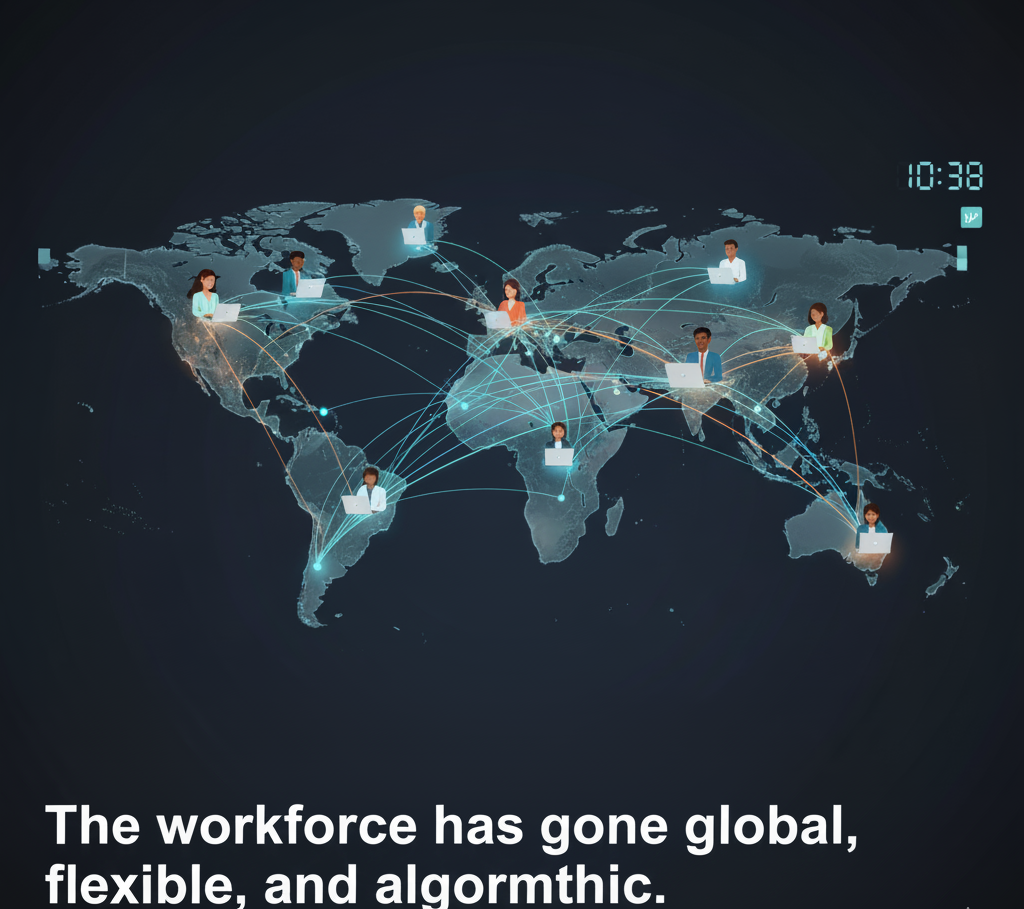
The landscape of work is transforming—one project at a time. All around the globe, countless individuals are stepping away from the traditional 9-to-5 grind to dive into freelancing, digital nomad lifestyles, and remote opportunities. Welcome to the era of “Gig Economy 2.0,” a fresh wave driven. By artificial intelligence, blockchain innovations, and the power of global connectivity.
In 2024, nearly 73 million Americans—or about 38% of the U.S. workforce—were earning their living through gig work. On a global scale, the World Bank estimates that around 12% of employment. Now takes place through freelance and digital platforms. From Bengaluru to Berlin, remote workers are creating a decentralised workforce where flexibility meets uncertainty, with technology facilitating every interaction.
However, as this digital labour revolution unfolds, some important questions come to the forefront:
- Is freelancing genuinely empowering workers, or is it merely a new form of instability?
- Can technology pave the way for fairer, more inclusive work environments?
- And will the gig economy solidify its role as the backbone of the global workforce?
The Rise of Gig Economy 2.0: From Flexibility to Intelligence
The gig economy kicked off with platforms like Uber, Upwork, and Swiggy. Essentially, digital middlemen link workers with customers for quick tasks. While it brought a level of flexibility, it often came at the expense of job security. Now, we’re entering Gig Economy 2.0, which is a smarter evolution of this concept. Today’s platforms are incorporating AI for better matching, blockchain for credentials, and instant payments across borders.
Freelancers are no longer just racing to offer the lowest price. They’re creating verified skill portfolios, automating their workflows, and connecting with clients around the world without needing a middleman. AI tools like ChatGPT, ClickUp AI, and Adobe Firefly are revolutionising productivity. For instance, a designer in India can leverage AI-assisted tools to produce projects that meet global standards in just a few hours. While smart contracts on Web3 platforms guarantee timely payments and clear terms.
This shift marks a significant transformation—one where freelancing evolves into a structured, skill-based profession instead of just a side gig.
India and the World: A Tale of Two Gig Economies
The gig economy is evolving in fascinating ways, showcasing distinct regional differences in how it’s embraced. The support it receives from policies and its overall economic effects.
India’s Rapid Growth:
India is quickly becoming one of the fastest-growing freelance markets in the world. The number of gig workers has jumped from 7.7 million in 2021 to 12 million in 2024-25. It’s projected to hit 23.5 million by 2030 and potentially contribute as much as 1.25% to the GDP.
This surge is largely fueled by young, tech-savvy professionals. Who benefits from affordable internet, digital payment options, and a flexible work culture? Indian freelancers are making their mark in areas like software development, digital marketing, and design—fields where global demand is high and pay is becoming more equitable.
On the policy front, initiatives like the Code on Social Security (2020) are designed to extend welfare benefits to gig workers. Additionally, states like Rajasthan have set up welfare funds specifically for gig workers. This marked an important step towards their formal recognition.
Global Perspective:
On a global scale, freelancers make up about 12% of the workforce, with estimates ranging from 154 million to 435 million worldwide. In the United States, the number of freelancers surged by 90% from 2020 to 2024. And projections indicate that by 2027, around 86.5 million people will be freelancing—over half of the country’s total labour force.
United States: The Mature Market and Epicentre of Debate
The U.S. has the world’s largest gig economy, with 59 million Americans (36% of the workforce) freelancing in 2022, contributing $1.35 trillion. This trend is accelerating, with freelancers potentially exceeding half the workforce by 2027, and the market is projected to $191.1 billion in 2025. The diverse U.S. gig workforce, averaging $69,000 annually (20% of full-time contractors earn over $100,000) and skewed young (70% under 35), is central to legal debates, particularly concerning worker classification as highlighted by California’s AB5.
Europe’s Cautious Stance:
In Europe, the approach is more measured, with countries like Germany reporting that less than 1% of the workforce was engaged in platform-based work as of 2017. However, research from McKinsey suggests that 20-30% of the labour force. Both the US and the EU-15 consist of independent workers. This indicates that official statistics may significantly underestimate the true level of gig participation.
Southeast Asia: The Mobile-First Frontier
Southeast Asia’s gig economy is booming, driven by a young, mobile-first population, and is set to become the world’s fourth-largest economy by 2030. “Super-apps” like Grab are at the heart of this growth. However, the region faces challenges, including a large informal labour market (with up to 80% informal employment in some ASEAN countries), inadequate worker protections, infrastructure gaps, and a significant unbanked population (approximately 70%). Western platforms, like Uber, struggled due to a lack of localisation, highlighting the need for tailored business models in Southeast Asia’s unique cultural and economic landscape.
| Feature | United States | European Union | India | Southeast Asia |
| Market Size (USD) | $191.1 Billion (2025 proj.) | $145.1 Billion (2025 proj.) | $455 Billion (Gross Volume proj.) | N/A (Dominated by regional “super-apps”) |
| Projected CAGR | 15.79% (Global avg.) | 17% (Annual proj. by 2025) | 17% | Nascent; high labour market informality |
| Number of Gig Workers | 59 Million (36% of workforce) | 28.3 Million (2022), rising to 43 Million (2025 proj.) | 7.7 Million (2020-21), rising to 23.5 Million (2029-30 proj.) | Diverse; 200M in China, 430k-2.3M in Indonesia |
| Key Regulatory Framework | Worker Classification Laws (e.g., California’s AB5) | EU Platform Work Directive | Code on Social Security, 2020 | Nascent; high labor market informality |
Competitive Advantages and Challenges of Indian Freelancers
India stands out in the global freelance economy, thanks to its unique advantages. Indian freelancers bring a mix of cost-effectiveness, a wide range of skills, and the benefit of time-zone flexibility. This special positioning has turned India into one of the fastest-growing freelance hubs, drawing in international clients from sectors like IT, digital marketing, creative design, and customer support.
Cost Arbitrage – Quality Talent at Competitive Prices
One of India’s strongest advantages is cost arbitrage. Due to purchasing power parity, Indian professionals can charge lower rates compared to Western counterparts while still earning significantly higher than domestic market wages.
- Example: A graphic designer in India or Bangladesh can provide world-class work at a fraction of Silicon Valley rates, making them highly attractive to global clients.
- Impact: This creates win-win economics—affordable services for clients and higher incomes for freelancers.
Time Zone Benefits – “Work While You Sleep” Model
India’s geographical position enables a 24/7 workflow model.
- While Western markets sleep, Indian freelancers keep projects moving—especially valuable in IT support, customer service, and content creation.
- For global firms, this ensures continuous productivity and faster turnaround times.
Skill Diversity – A Multi-Sector Talent Pool
India produces a vast pool of highly skilled professionals across domains:
- Information Technology & Software Development
- Graphic and UX Design
- Digital Marketing & SEO
- Content Writing & Customer Service
This multi-disciplinary talent base, strengthened by India’s robust educational system, aligns with high-demand global sectors (Grand View Research).
Regulatory Framework – Flexibility vs. Protection
Unlike the EU or California, India has not attempted to reclassify gig workers as employees. Instead, under the Code on Social Security 2020, platforms contribute to welfare schemes while freelancers maintain contractor status.
- Advantage: Retains flexibility and cost competitiveness.
- Challenge: Limited worker protections compared to Western models.
Policy & Structural Challenges Facing Indian Freelancers
Despite its growth, India’s freelance economy faces serious hurdles that hinder its long-term potential.
1. Tax Complexity & Payment Delays
- According to Razorpay, 58% of freelancers face delayed or missing payments, compounded by unclear tax obligations on cross-border income.
- Awareness about provisions under the Social Security Code is particularly low among freelancers in Tier 2 and Tier 3 cities.
2. Financial Infrastructure Gaps
Traditional credit scoring models fail to recognise irregular freelance income, limiting access to loans and financial services.
- Emerging solutions: Alternative credit scoring using platform transaction data and India’s Account Aggregator framework (GKToday).
- Potential: This can open doors to formal credit for millions of freelancers.
Global Comparison – What India Can Learn
European Models – Portable Benefits & Collective Bargaining
Countries like Germany, France, and the Netherlands are testing portable benefit platforms and sector-level bargaining agreements. These provide social protection while retaining flexibility (Carnegie Endowment).
US State-Level Innovation – Worker Classification Battles
In the US, states like California (AB5 law) use the ABC test to determine if gig workers are truly independent contractors. Other states, such as Massachusetts, New York, and Washington, are exploring similar measures (Fortune India).
- Insight: India could adapt such models for portable social security without losing global competitiveness.
India has established itself as a powerhouse in the global freelance market, thanks to cost advantage, time-zone efficiency, and a massive talent pool. However, challenges around taxation, payments, and social protection remain critical. To sustain leadership, India must build robust financial infrastructure and progressive regulatory frameworks—striking the right balance between flexibility and worker security.
Technology as the Great Equaliser—and Divider
AI and Automation
Artificial Intelligence is like a double-edged sword for gig workers. On one hand, the demand for AI skills skyrocketed by 600% in 2023, and freelancers who know their way around AI tools can command rates that are up to 40% higher. On the flip side, generative AI poses a real threat to creative fields—think copywriting, graphic design, and even coding—by taking over tasks that were once the domain of humans. What’s the outcome? We’re seeing a new hierarchy in the freelancing world: those who can leverage AI are thriving, while traditional task-based workers are finding their opportunities dwindling.
Blockchain and Web3 Platforms
Web3 is set to take freelancing to the next level. With smart contracts and decentralised marketplaces, workers could sidestep middlemen, take control of their digital identities, and ensure they get paid automatically. Platforms like Braintrust are already testing this approach, slashing platform fees and giving workers a say in governance.
Though it’s still in its early stages, this shift towards decentralisation could really change the game, moving power from corporations to individuals—if it’s backed by thoughtful design and fair regulations.
Corporate Evolution: From Employees to Ecosystems
For companies, gig work is not just about cutting costs; it’s a strategy. Nearly 48% of Fortune 500 CEOs plan to hire more freelancers, and half believe their business cannot function without them. After the pandemic, hybrid models are common. Corporations maintain a core team and expand flexibly using on-demand talent networks.
This represents a shift from long-term employment contracts to as-a-service engagement, where companies rent skills instead of hiring workers. While this approach is efficient, it also shifts risk, putting job security and retirement responsibility onto individuals.
What the Future Holds: Three Emerging Directions
- AI-Augmented Skill Markets
AI will integrate more into gig platforms, creating smart marketplaces that predict project fit, automate proposals, and check skill authenticity. New micro-specialisations like prompt engineering and AI ethics consulting will change freelance value.
- Decentralised Work Ownership
Blockchain-based platforms could support worker cooperatives and DAOs (Decentralised Autonomous Organisations). This would give freelancers shared ownership, transparent governance, and fairer revenue distribution.
- Regulated Flexibility
Governments are trying out hybrid models:
- EU Platform Work Directive (2024) ensures algorithmic transparency.
- India’s Social Security Code extends protections without limiting flexibility.
- U.S. state laws are testing new worker classification standards.
A balanced framework that promotes flexibility and fairness will define sustainable success.
Conclusion: The Future Is Freelance—But It Must Be Fair
The gig economy isn’t just a trend; it’s reshaping how we think about work. By 2030, it’s predicted that more than half of the global workforce will be involved in freelancing or platform-based jobs. For India, this shift brings both exciting opportunities and significant challenges: it’s a chance to tap into the creativity and innovation of young talent, but it also raises questions about how fairly that wealth will be distributed.
Gig Economy 2.0 has the potential to empower individuals—if we back it up with ethical technology, portable benefits, and a focus on digital literacy. If not, we risk widening the gap of inequality and increasing our reliance on digital platforms.
In the end, the future of freelancing will mirror the decisions we make today. Are we going to create a system that honours human creativity, security, and dignity, or one that reduces work to mere algorithms and ratings?
The future of work isn’t solely being shaped by technology. It’s being crafted by us.
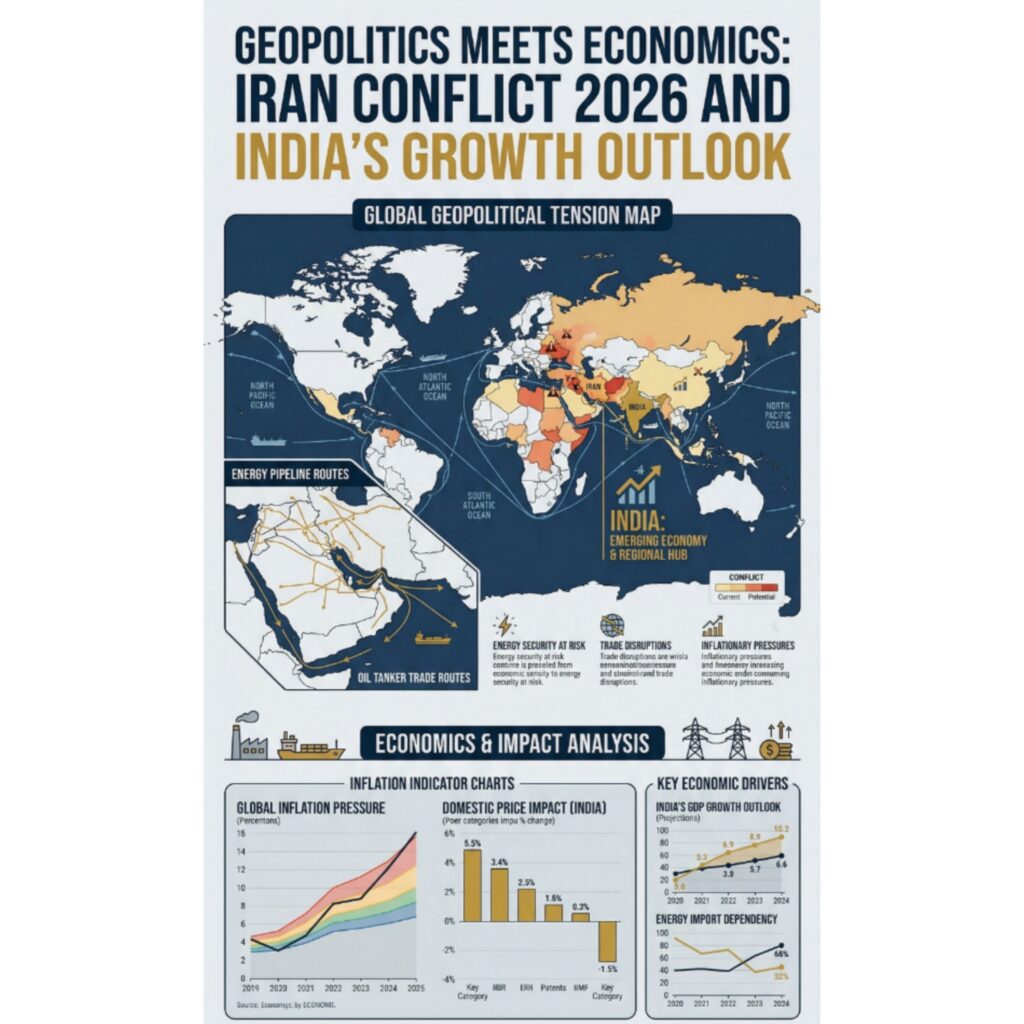
How the 2026 Iran Conflict Could Reshape India’s Inflation, Energy Security and Growth
The March 2026 U.S.-Israel air strikes against Iran have sparked a broader Middle East war…

Union Budget 2026 – Overview and Analysis
The Union Budget 2026-27 was presented on Feb 1, 2026. Continued the government’s multi-year plan…
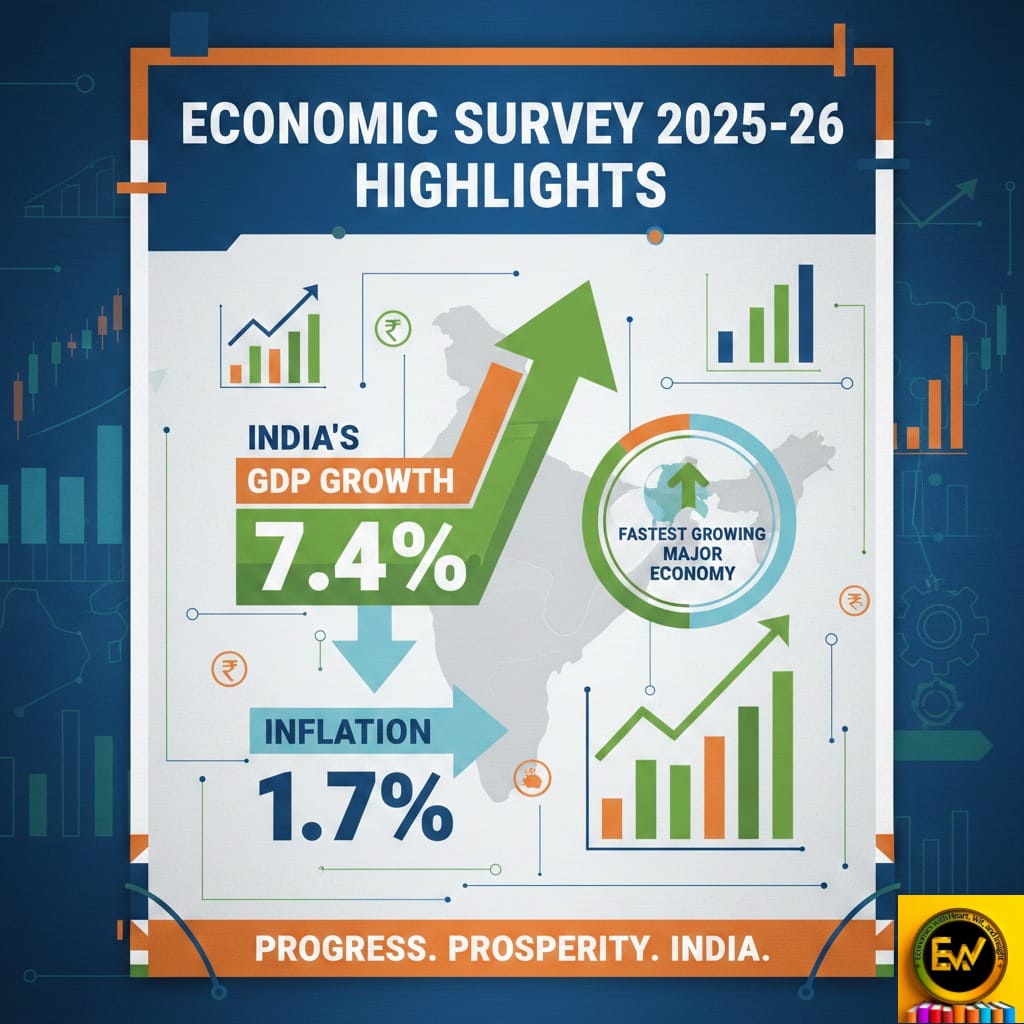
Complete Analysis of the Economic Survey 2025-26
The Economic Survey 2025-26, presented on January 29, 2026, offers a mostly positive outlook on…

The Indo-Pacific: A Geoeconomic and Strategic Epicenter
The Indo-Pacific has become the world’s most dynamic economic region. It is home to over…
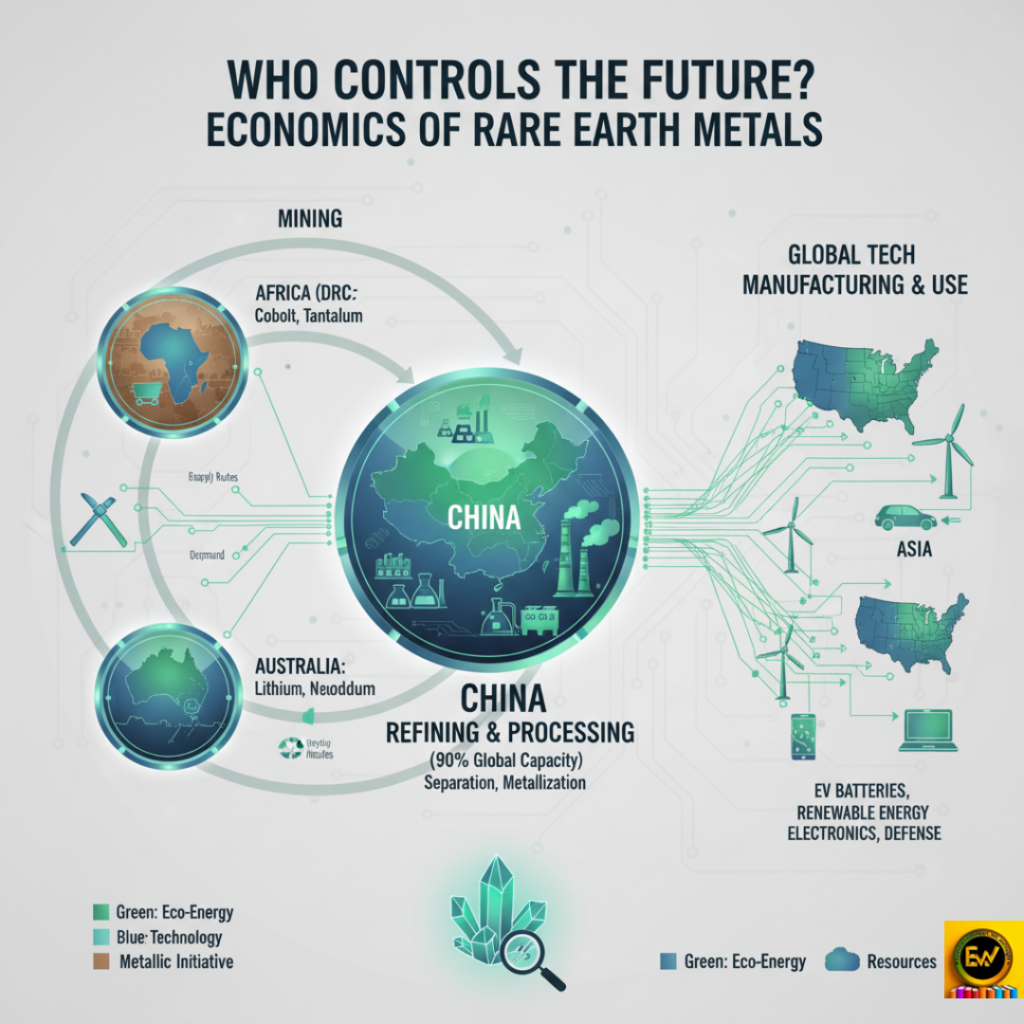
Economics of Rare Earth Metals
Rare earth elements and critical minerals are vital for clean energy and technology. They form…
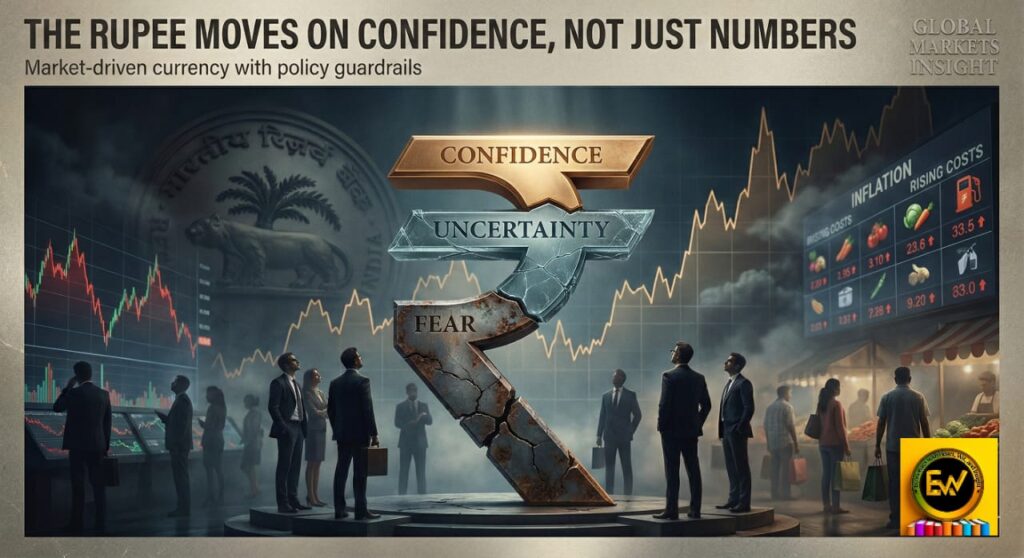
Indian Rupee Depreciation Against the US Dollar
Introduction In recent years, the Indian Rupee has undergone significant depreciation against the US Dollar,…


-
-
-
-
-
-
-
-
-
-
-
-
-
-
-
-
-
-
-
-
-
-
-
Show CommentsCan you be more specific about the content of your article? After reading it, I still have some doubts. Hope you can help me.
Thank you for reading! I appreciate your curiosity.
Could you share which part of the article left you with doubts?
Your feedback helps us understand what needs more clarity, and we’ll use it to improve our content in the future.
Happy to explain anything in detail!
Your point of view caught my eye and was very interesting. Thanks. I have a question for you.
Your article helped me a lot, is there any more related content? Thanks!
I don’t think the title of your article matches the content lol. Just kidding, mainly because I had some doubts after reading the article.
Your article helped me a lot, is there any more related content? Thanks!
Your point of view caught my eye and was very interesting. Thanks. I have a question for you.
Your article helped me a lot, is there any more related content? Thanks! https://accounts.binance.com/hu/register?ref=IQY5TET4
Thank you for your sharing. I am worried that I lack creative ideas. It is your article that makes me full of hope. Thank you. But, I have a question, can you help me?
I don’t think the title of your article matches the content lol. Just kidding, mainly because I had some doubts after reading the article.
Thank you for your sharing. I am worried that I lack creative ideas. It is your article that makes me full of hope. Thank you. But, I have a question, can you help me?
Your point of view caught my eye and was very interesting. Thanks. I have a question for you. https://www.binance.info/register?ref=IHJUI7TF
I don’t think the title of your article matches the content lol. Just kidding, mainly because I had some doubts after reading the article. https://accounts.binance.com/cs/register-person?ref=OMM3XK51
Thanks for sharing. I read many of your blog posts, cool, your blog is very good.
I don’t think the title of your article matches the content lol. Just kidding, mainly because I had some doubts after reading the article.
I don’t think the title of your article matches the content lol. Just kidding, mainly because I had some doubts after reading the article. https://www.binance.com/register?ref=IXBIAFVY
Thanks for sharing. I read many of your blog posts, cool, your blog is very good.
Thank you for your sharing. I am worried that I lack creative ideas. It is your article that makes me full of hope. Thank you. But, I have a question, can you help me? https://accounts.binance.info/ru/register?ref=O9XES6KU
I don’t think the title of your article matches the content lol. Just kidding, mainly because I had some doubts after reading the article. https://www.binance.com/register?ref=QCGZMHR6
Thank you for your sharing. I am worried that I lack creative ideas. It is your article that makes me full of hope. Thank you. But, I have a question, can you help me?
Your article helped me a lot, is there any more related content? Thanks! https://accounts.binance.com/en/register?ref=JHQQKNKN
Your point of view caught my eye and was very interesting. Thanks. I have a question for you.
Your point of view caught my eye and was very interesting. Thanks. I have a question for you.