
How the 2026 Iran Conflict Could Reshape India’s Inflation, Energy Security and Growth

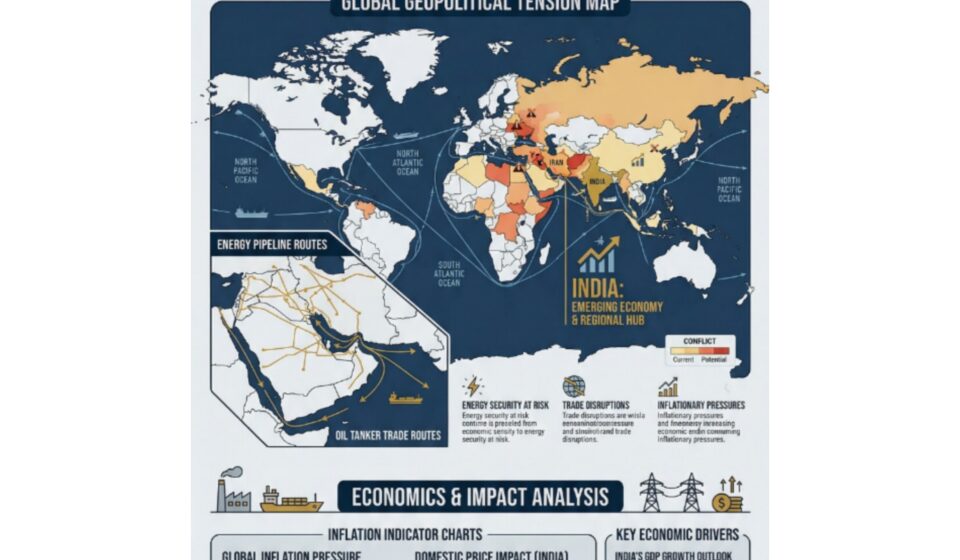
The March 2026 U.S.-Israel air strikes against Iran have sparked a broader Middle East war that threatens global economic stability. These conflicts have already pushed oil prices up from about $60 in January to around $100 per barrel. Tehran has effectively closed the Strait of Hormuz, the narrow point through which about 20% of the world’s oil passes. International institutions warn that ongoing disruptions could reduce 2026 world GDP growth by around 0.3 percentage points. In summary, the Iran conflict has become a significant supply shock to the global economy. Emerging markets like India now face high commodity prices, rising global inflation, and financial instability. This article explores how these shocks will impact India’s inflation, fiscal balance, and growth outlook, as well as what India can do to lessen the effects.
Global Economic Impact
The war’s immediate impact has been on oil and related commodity markets. When Iranian forces threatened tanker traffic, benchmark Brent crude prices jumped above $100, briefly reaching $120. This spike reflected fears that about one-fifth of the global oil supply had been disrupted. OECD forecasts indicate that global growth will average around 2.9% in 2026, consistent with previous estimates. However, they warned that ongoing disruptions to exports from the Middle East could push energy prices higher, which would increase inflation and slow growth. In reality, global supply chains are already feeling the strain. Shipments through the Strait of Hormuz and other Gulf routes have been redirected or delayed, and even fertiliser exports have suffered due to refinery outages in the area. According to the WTO, if oil and gas prices stay high through 2026, global growth could drop by about 0.3 percentage points.
Rising energy costs affect the whole economy. Inflation from petrostates raises business expenses and consumer prices almost everywhere. For instance, the OECD states that this oil shock will increase input costs for companies and revive consumer price pressures globally. Many central banks are already signalling that inflation may remain elevated for a longer period. In the U.S., the OECD now anticipates inflation around 4.6% this year, significantly above the Fed’s 2% target, largely due to the oil shock. These factors tighten global financial conditions. Developing countries experience falling currencies as they pay more for fuel, further fueling inflation through pricier imports. Overall, geopolitics is adding a risky supply-side shock to an economy that is already susceptible to inflation, leading to stagflation risks around the world.
India’s Energy Security at Risk
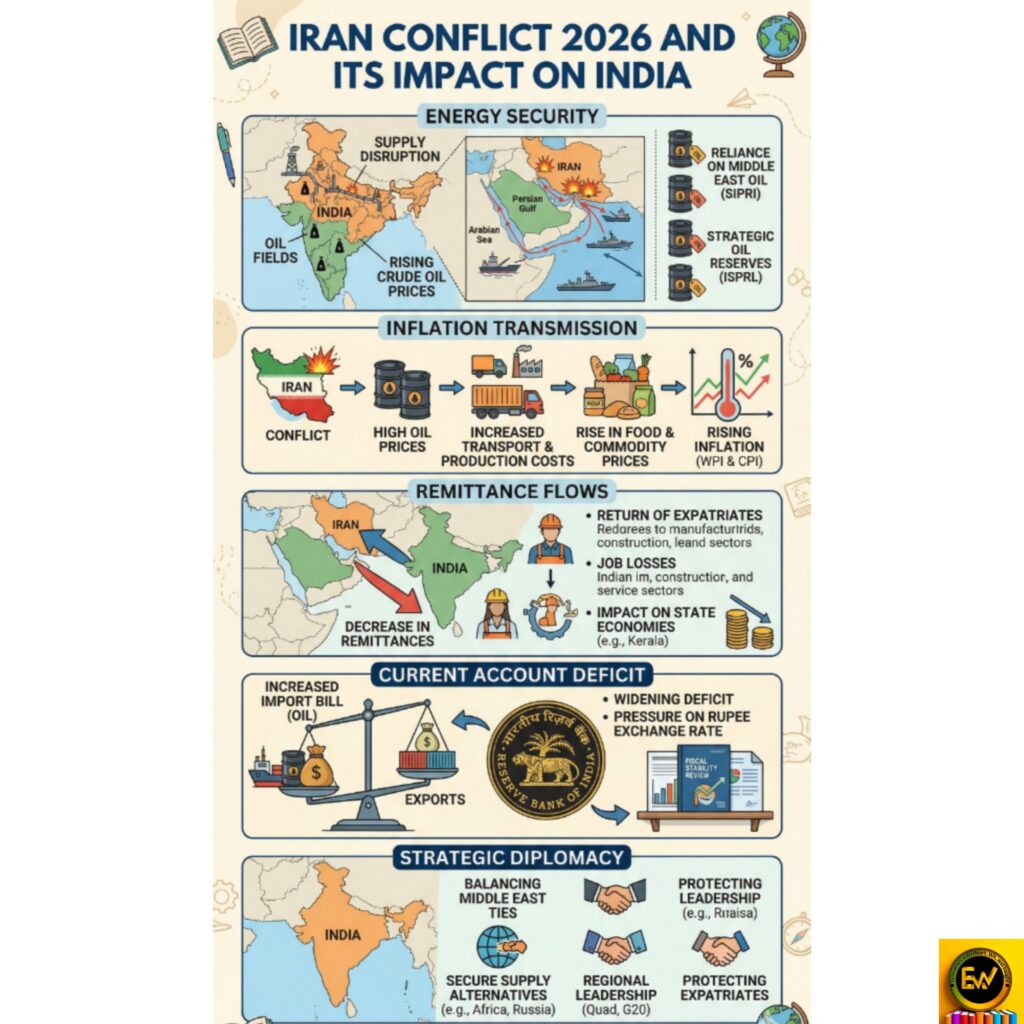
For India, the stakes are especially high. India imports nearly 90% of its crude oil and about half of its natural gas, making it very vulnerable to any foreign supply issues. In addition, around 40% of India’s imported oil comes from Persian Gulf countries through the Strait of Hormuz. Disruptions in Hormuz, like Iranian mine-laying or missile attacks, can threaten a large part of India’s supply. In March 2026, for example, LPG shipments from Hormuz nearly stopped. This led New Delhi to use emergency powers to increase domestic cooking fuel production.
With current consumption rates, India’s oil reserves are critically low, providing only about 20 to 25 days of supply. Should crude oil prices remain near $100 per barrel for a year, the nation’s external finances would face significant deterioration. According to estimates from the brokerage Emkay, every $10 increase in the price of oil pushes India’s current account deficit (CAD) up by approximately 0.5 percentage points of GDP and contributes about 0.35% to retail inflation. Specifically, if oil prices reach $100, the CAD could escalate to nearly 2% of GDP, up from less than 0.8%.
India is diversifying its oil suppliers to reduce its 50% reliance on the Middle East. In fiscal 2026, imports from the U.S., Nigeria, Angola, and Brazil rose as those from Russia and Iraq declined, though the Hormuz route remains critical. To mitigate supply risks and high prices, India is expanding its Strategic Petroleum Reserves from 53 million to 118 million barrels by 2029 as “economic insurance”. Despite these efforts, the country still faces immediate financial and supply vulnerabilities.
Inflation Impact on India
India is having a problem with fuel and energy prices going up. This is causing inflation in India to increase. Petrol, diesel and LPG are things people buy for their homes. When their prices rise, it affects people’s expenses. Farmers have to pay more for diesel, electricity and fertilizer making their work costlier.
- When transporting goods becomes more expensive, the price of goods also increases.
- Economists say that these price increases will be reflected in the prices of things people buy in India.
Fuel price hikes make transportation costs rise, which in turn makes the prices of food, vegetables and other daily essentials go up. High energy costs from countries also drive up the prices of important things like fertilizer that farmers use. This can make food prices go up again.
The Reserve Bank of India aims to keep inflation at 4 per cent. However, rising oil prices can push inflation up. If oil prices stay high, inflation in India may reach 5 or 6 percent exceeding the target. The Reserve Bank of India may have to choose between controlling inflation and letting the economy grow.
Inflation affects people in various ways.
- Urban workers face fuel costs, which reduce their spending on non-essential items.
- Rural residents, who spend more on food and fuel, might have to cut back on expenses.
In areas with high diesel and fertiliser costs, farmers’ incomes can be lowered, and the economy can be slowed down. Overall, rising energy costs drive up inflation, causing difficulties and making the Reserve Bank of India more cautious.
Impact on Migrant Workers and Remittances
The significance of the Gulf region to India is primarily rooted in its large expatriate workforce. Currently, over 3 million Indians are employed in West Asia, with nearly 10 million across the broader Middle East. However, escalating instability has prompted a significant exodus; since late February, the government reports that more than 220,000 citizens have returned from the UAE, Saudi Arabia, and Qatar, with further evacuations underway in Iran. If regional conditions fail to stabilise, many workers may be forced to seek employment elsewhere, likely losing the high wages characteristic of Gulf positions.
Financial contributions from these workers, known as remittances, serve as a vital economic pillar for India. In the 2023-24 fiscal year, Gulf nations alone contributed over ₹3.7 lakh crore (approximately $40 billion), accounting for 38% of India’s total remittances. Historically, these funds have covered 40-45% of India’s import costs. Projections suggest that prolonged regional instability could reduce these inflows by 10-20%, resulting in an annual loss of $5-10 billion and complicating India’s fiscal management.
Trade and Strategic Implications
India’s trade and strategic partnerships in the region are also impacted. India and Iran have long been connected through energy and regional access. Even though US sanctions stopped Iranian oil imports, India has kept working on projects like the Chabahar Port, a deep-sea port on Iran’s Gulf of Oman coast. The Chabahar Port is India’s gateway to Afghanistan and Central Asia, allowing trade and some Iranian imports without going through Pakistan. Recently, India got a US waiver to keep developing Chabahar. The conflict raises questions about Iran’s ability to keep the port secure and running, which could threaten that link.
India has strengthened ties with other Gulf partners, notably through a 2022 economic agreement with the UAE that has already seen trade top $100 billion, to double that by 2032. This partnership includes joint energy and infrastructure projects involving Emirati investment. Similarly, India is deepening relations with Saudi Arabia on refinery and petrochemical initiatives. Saudi Arabia provides 15% of India’s oil and has pledged $100 billion in investments across various sectors. To ensure energy security, India also increased oil imports from the U.S. and other nations in early 2026, following American advice to diversify its supply.
India is maintaining a cautious balance. While preserving cultural and infrastructure ties with Iran, such as a gas pipeline project, it is simultaneously strengthening defence and energy partnerships with the US, Israel, and Gulf states. During the regional crisis, India participated in efforts to secure the Hormuz corridor alongside six other nations and managed citizen evacuations. This strategic diplomacy reflects India’s goal of ensuring energy security while remaining neutral in a conflict it did not initiate.
Policy Response Options for India
India’s policymakers possess multiple strategic levers to address these shocks:
Diversifying Energy Sources
To mitigate dependence on a single region, India should broaden its supply channels and routes. This involves strengthening partnerships with alternative oil and gas providers in Africa, Latin America, Russia, and the U.S. Furthermore, India ought to expand its LNG import infrastructure and evaluate the feasibility of regional pipeline projects, such as the Iran–Pakistan link. On the domestic front, oil firms should focus on developing resilient supply chains and adjusting procurement strategies, as evidenced by recent reductions in imports from sanctioned Russian entities.
Strategic Petroleum Reserves (SPR)
To mitigate future price surges, India is expanding its SPR capacity to cover several weeks of imports. These reserves serve as an “economic insurance policy,” allowing for drawdowns during crises to stabilise domestic prices. Beyond current expansion, further investments and potential regional partnerships for shared oil stocks could significantly enhance resilience against supply shocks.
Transition to renewable energy
To decrease reliance on oil imports, India should prioritise green power and fuels by expanding solar, wind, hydro, and biofuel capacity. The government has set a target of 500 GW of non-fossil capacity by 2030. Key strategies include grid enhancements, tax incentives, and subsidies for emerging technologies like hydrogen and batteries. Notably, India reached a significant milestone by achieving 50% non-fossil electricity capacity by mid-2025. Sustaining this momentum is essential for meeting climate objectives and strengthening energy security through reduced import dependency.
Demand-side management
Encourage efficient energy use. Subsidy reforms (gently allowing market prices to reflect costs) and promotion of electric vehicles can dampen fuel demand. For example, advanced ethanol blending, electric bus fleets, and smarter fuel pricing can limit the pass-through of global oil shocks.
Maintaining fiscal and monetary discipline
To protect the budget against rising deficits, the government might prioritise essential spending or expand revenue streams, perhaps by reviewing fuel tax reductions. At the same time, the RBI remains on high alert regarding inflation. Analysts anticipate that its April 2026 policy statement will reflect a cautious stance: keeping interest rates unchanged for the moment while signalling that any sustained inflationary pressure—whether driven by currency fluctuations or rising food and oil costs—will trigger a tightening of monetary policy.
Maintaining diplomatic equilibrium
India should sustain high-level dialogue across all regions, including keeping open communication with Iran to protect its assets and stabilise oil imports, while simultaneously collaborating with Gulf nations and the U.S. Safeguarding imports can be further supported by joining international maritime security coalitions to protect vital shipping routes. Furthermore, by backing de-escalation efforts through joint working groups or the UN, India acknowledges that its own national interests are best served by a peaceful Middle East.
Future Outlook for India’s Economy
India is facing some problems right now. The country’s growth, which was around 7 to 8 per cent before the conflict, may slow down if energy costs stay high and other countries do not buy much from India. This means that prices for things in India will go up, which will make it harder for people to buy what they need and for the government to manage its money. The value of the rupee, India’s money may also go down compared to the dollar.
India possesses significant economic advantages. Urban investment is rising, and government reforms are actively supporting growth. As domestic manufacturing resumes and consumer spending increases, the nation’s fiscal position is strengthening.
Future economic stability depends largely on the resolution of the current conflict. A cessation of hostilities could lower energy costs and mitigate negative impacts. This would allow for increased infrastructure spending and higher private investment. Furthermore, India is expanding its trade with non-involved nations and transitioning toward renewable energy to decrease foreign dependence.
India presents significant long-term opportunities as a major market, giving it leverage to attract foreign investment in oil refineries and petrochemicals. Its distance from the Persian Gulf allows for energy diversification via imports from the US or West Africa, potentially establishing the nation as a regional hub for gas and renewables.
While rising prices require fiscal caution, inflation may drive investment into stable assets like real estate or stocks and encourage more disciplined government spending.
Conclusion
The 2026 Iran conflict really shows how politics and energy markets are connected to the economy. For India, when oil prices go up and there are problems with supply, it can cause inflation and problems with trade and money. This can be a test for countries that are still growing. India is trying to handle this by using a mix of energy sources, being flexible with its economy and being smart about how it deals with other countries. This will decide how much the conflict affects India’s growth. This situation shows that even if a war is far away, it can still have a big impact on a country like India. Countries that are still growing need to think about how politics can affect their economies when they are planning for growth. They should use crises as a chance to make their economies stronger and more able to take care of themselves. If India does this, it can be stable and prosperous in a time when problems in one region can affect the world.