
Why Branded Clothes Cost More
The global apparel market is projected to reach approximately $1.84 trillion in 2025. Nevertheless, Many consumers are confused by the high prices of simple clothing, such as a T-shirt or a pair of jeans, when referring to a brand. In reality, manufacturing typically constitutes a minor proportion of the retail price. The industry’s markups on clothing are considerable, frequently ranging from 100% to 350% at the retail level. This article aims to elucidate the disparity between the actual production cost of a garment and the various factors that influence its price, including brand markup, brand value, marketing expenditures, and taxation. We will conduct a comparative analysis of the cost structures of generic and branded items, delve into consumer psychology, and examine global versus Indian pricing strategies to assist consumers in determining when a brand label genuinely justifies the additional expenditure.
Manufacturing vs Branding: The Real Price Gap
Most of a garment’s price is added after it’s made. The actual costs for fabric, labour, and shipping are often quite low. For instance, one analysis showed that a $15 shirt had about $3.15 in production costs. Wholesalers then added about $6.30 in markup, which is roughly half of the final price. Brand and retailer markups increase the initial cost. The standard pricing in the industry typically involves a markup of about 2.2 times at the brand or wholesale level and another 2.2 times at the retail level. This means that a garment costing $100 to produce could sell to stores for around $220, and then to consumers for about $480 to $500.
- Material and Labour: Labour costs vary widely. In the US and EU, it costs between $5 and $15 to produce a T-shirt. In countries like China, India, or Bangladesh, it’s around $1 to $5 per shirt. Overhead expenses, such as factory costs and quality control, also add to this.
- Brand and Wholesale Markup: Designers set high margins. They usually price their clothing at about 2.2 times the production cost when selling to retailers.
- Retail Markup: Stores add another markup of about 2.2 times, or 110%. This practice means retail prices can be four to five times the initial production cost.
- Example: As one industry insider noted, a $500 jacket might cost just $250 to make, but retailers label it around $2000 to ensure they can make their profit. Additional fees for logistics and store operations, like rent, labour, and utilities, also play a role, but most of the cost comes from markup.
In summary, manufacturing often accounts for a small portion of the price, sometimes less than 20 to 30 per cent. Brand, distribution, and retail costs make up the rest. These markups clarify why even countries with low labour costs, like Bangladesh, can only maintain low production costs. The final price mainly results from branding and resale margins.
Figure: Manufacturing and shipping costs to produce 100 basic T-shirts in various countries. Even the lowest-cost country (Bangladesh) totals ~$855 for 100 shirts, vs ~$1,750 in the USA. This highlights how base production costs vary widely but are dwarfed by final markups.
| Country | Manufacturing & Materials (USD) | Shipping (USD) | Total (USD) |
| USA | 1,650 | 100 | 1,750 |
| China | 910 | 404 | 1,314 |
| Bangladesh | 540 | 315 | 855 |
| Vietnam | 635 | 513 | 1,148 |
| Pakistan | 735 | 365 | 1,100 |
Data: Visual Capitalist cost breakdown for 100 T-shirts (bulk order + shipping).
Brand Equity and Consumer Psychology
Beyond costs, a significant part of branded pricing comes from intangible value. Brand equity is how consumers view the quality, status, and identity associated with a name. Branded apparel often signals better quality or prestige. Studies show that most people believe this. In one experiment, around 69% of participants rated a branded pair of jeans as higher quality than an identical unbranded pair. Branded items also create social and emotional value. Wearing a well-known label can boost status or confidence. In India, surveys indicate that aspirational young shoppers see premium brands as a lifestyle upgrade.
Perceived Quality: Brands promise consistent fabric quality, fit, and finish. Many consumers trust that a name-brand shirt will last longer or fit better. In the jeans study, 10% thought unbranded was better, and 21% saw no difference, so perception isn’t the same for everyone.
Social Status: Brand labels serve as status symbols. Owning designer or global labels, like Nike and Gucci, can signal wealth or taste. This aspirational appeal can lead shoppers to pay more. In India’s growing fashion market, spending on branded apparel is rising quickly. Premium branded wear makes up about 18% of the $70 billion industry, driven by a surge of brand-conscious youth.
Identity & Loyalty: For some, a brand reflects their identity, such as eco-friendly, sporty, or luxury. Loyal customers will pay a premium for the logo. This loyalty contributes to brand equity, allowing companies to charge more.
In short, brand equity taps into psychology. People value perceived quality, status, and identity, and they are often willing to pay a significant premium for it. These intangible factors allow brands to raise prices far beyond the cost of goods.
The Role of Marketing and Endorsements
Branded clothing costs more because companies spend large amounts on marketing and promotion. Every celebrity endorsement, ad campaign, fashion show, or sponsorship ultimately gets paid for by consumers. For example, Nike’s 2024 financial report shows it spent $4.3 billion on advertising and marketing in one year, which is about 8.4% of sales. Luxury brands and sportswear companies also invest 10% to 20% of their revenue in marketing.
Celebrity Endorsements: High-profile ambassadors come with a high cost. In India, hiring top Bollywood or sports stars is very pricey. For instance, A-list Bollywood actors often demand ₹1 to 10 crore (10 to 100 million rupees) for a single campaign. These endorsement fees get added to retail prices.
Advertising Campaigns: Global brands run ad campaigns that cost millions, using billboards, social media promotions, and designer collaborations. Producing high-quality ads and funding runway shows or magazine spreads is very expensive. Brands make up for this by increasing prices.
Influencers & Events: Even mid-tier labels spend money on influencer marketing, pop-up events, and in-store promotions to create buzz. All these activities increase the effective cost per garment.
In the end, marketing builds brand awareness and desirability. However, it also creates a real expense. One analysis highlights that in fast fashion, a large part of the retail price covers promotional costs. As a result, marketing-driven brands often sell similar products at much higher prices than unbranded competitors.
Pricing Breakdown: Global vs Indian Brands
The difference in pricing between international and local brands can be significant, especially in India. Key factors include taxes, import duties, and market positioning.
Market Growth & Share: India’s apparel market is booming. It is projected to reach $130 to $150 billion by 2030. By then, over 50% of apparel spending is expected to be on branded products, showing rapid growth in branding. Even homegrown brands like Zudio and Pepe Jeans India are expanding quickly. International brands entering India often target the mid to premium segment to align with local incomes.
Chart: India’s apparel market size and growth (2018 to 2030 projections). The market is expected to more than double by 2030, with branded apparel taking the majority.
Taxes and Duties: In India, taxes significantly increase retail prices. Under recent reforms, garments priced above ₹2,500 (around $30) attract an 18% Goods and Services Tax (GST) instead of 5%. This means many premium items, typically global-branded apparel, incur the higher rate. For example, on the Lacoste India site, most T-shirts (around $99) fall above the ₹2,500 threshold, resulting in high taxes. In contrast, local mass-market clothing priced below ₹2,500 only pays 5%. Therefore, imported global brands often cost more due to this tax structure.
Operational Costs: Retail operating expenses in India are also high. Store rents, utilities, and logistics cut into profit margins. One industry CEO mentioned that “retail works on thin margins, and overheads like rents are extremely high” in India. These expenses are passed on in prices. Compared to this, large global retailers may spread fixed costs across many markets and avoid import duties through local manufacturing, while smaller Indian brands incur higher per-unit costs on similar items.
Example Breakdown: A hypothetical comparison might show a global brand sneaker priced at ₹5,000 ($60) in India. About ₹1,000 could cover manufacturing in Bangladesh, ₹1,800 would be for import duties and markups, ₹900 for retailer markup, and ₹900 for GST and retailer margin. A comparable local brand sneaker might avoid import duties and rely on cheaper supply chains, yet still charge ₹3,000 to ₹4,000 due to overhead and branding. Exact figures may vary.
Overall, Indian consumers often pay more for the same branded garment than those abroad due to GST and distribution. However, local brands are catching up, and some Indian-made labels offer lower prices. The table below summarises these factors qualitatively:
| Factor | International Brands (India) | Indian Brands |
| Production base | Often overseas (China/Bangladesh) | Often domestic or similar overseas |
| Import Duty/GST | High (imports+18% GST on premium) | Only GST (5–12%) on domestic sales |
| Wholesale/ Retail Markup | 2–4× (same model) | 2–3× (often lower brand premium) |
| Marketing Spend | Very high (global ads, endorsements) | Moderate (local ads, digital) |
| Perceived Value | Premium/status, global image | Value or trend focus (but rising) |
Note: These are general trends; individual cases vary. International brands often use premium positioning and thus higher markups, whereas Indian brands may focus on value or niche fashion.
Are Branded Clothes Worth It? A Balanced View
Ultimately, whether branded clothes are “worth” the extra cost depends on what the consumer values. Branded items often provide better quality control, durability, or a unique design that makes the higher price reasonable. For instance, luxury fabrics, fair labour standards, and generous return policies can truly add value. Some customers appreciate the confidence that a brand offers, especially for expensive winter coats or performance gear.
However, the price difference is significant. Many fast-fashion items have little quality difference from cheaper options. In fact, one study found that while 69% of people saw a branded pair of jeans as higher quality, only about 10% believed the unbranded version was worse. This indicates that brand names do not always ensure better quality. Additionally, aggressive sales and discounts on branded items can sometimes make their prices lower than those of generic competitors.
Pros of Branded:
- Generally, higher quality materials or workmanship.
- Consistent sizing and fit.
- Fashion-forward designs and brand cachet.
- Better warranties or customer service.
Cons:
- Often much higher price for the same function (sometimes 2–3×).
- You may pay extra for a label rather than a substance.
- Some brands may exploit markup without commensurate quality (especially in mid-market).
Evaluate each situation individually. For basic items like T-shirts and socks or styles that go out of fashion quickly, the extra cost for a brand name might not be justified. However, for important pieces like a well-fitting suit or quality leather goods, investing in a reliable brand could be worthwhile due to durability and fit. In India, you might want to wait for sales or choose local brands if foreign labels have high taxes. Understanding the price breakdown—how much goes to production versus profit—can guide your spending decisions.
Conclusion and Takeaways
Branded clothing is more expensive because brands increase costs well beyond the factory price of fabric and labour. In manufacturing, labour in India or Bangladesh is inexpensive, but designers and retailers significantly raise the price. Brand equity allows companies to charge more for perceived quality and prestige. Marketing and celebrity endorsements add to the overall cost. In India, high GST on pricier clothing and steep retail costs further widen the gap.
Key points:
- Low manufacturing cost: Even high-end clothes often have modest production costs. Clothing markups can reach 100–350%emirateszonecr.com.
- Markup chain: Standard industry practice is ~2.2× markup at each step, so factory cost is only a small share.
- Brand premium: Consumers pay for logo, status and trust. Most people believe branded clothes are better (but not everyone).
- Marketing expense: Billions go into ads and celebrity deals (e.g. Nike’s $4.3B in 2024), which get recouped via higher prices.
- India specifics: Branded clothes here often carry extra taxes (18% GST) and distribution costs, making international brands especially pricey.
Understanding these factors helps shoppers consider cost and value. Branded clothes can be worthwhile for their quality, fit, or ethical reasons, but they often have a high markup. By looking beyond the label, comparing materials, construction, and true cost breakdown, consumers can make smarter choices about when to splurge and when to save.
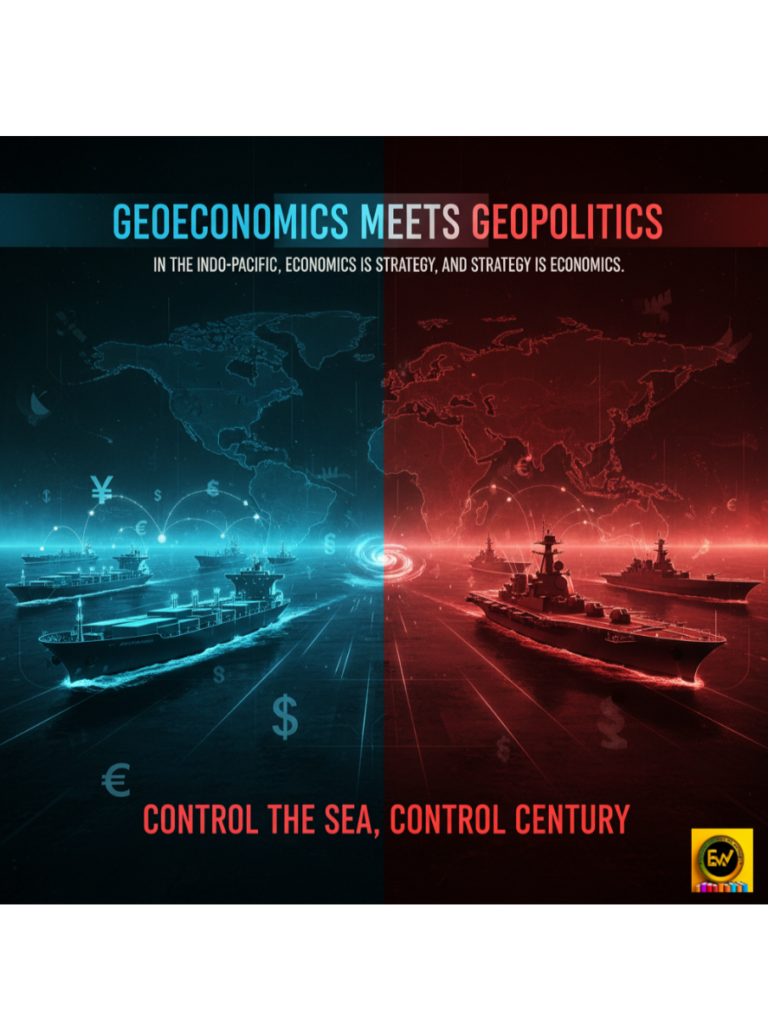
The Indo-Pacific: A Geoeconomic and Strategic Epicenter
The Indo-Pacific has become the world’s most dynamic economic region. It is home to over…
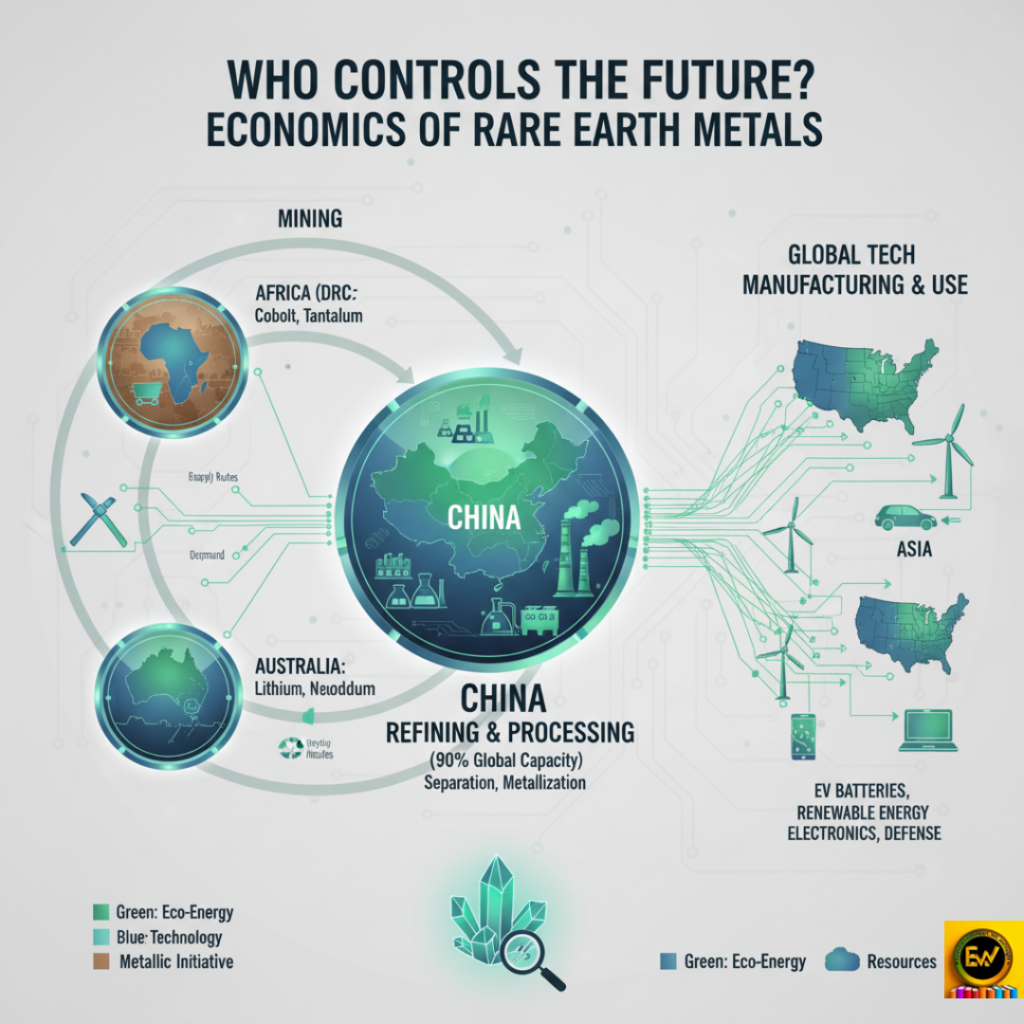
Economics of Rare Earth Metals
Rare earth elements and critical minerals are vital for clean energy and technology. They form…
Indian Rupee Depreciation Against the US Dollar
Introduction In recent years, the Indian Rupee has undergone significant depreciation against the US Dollar,…
Green Economy: Can India Balance Growth with Climate Goals?
India stands at a crucial point in history. As the world’s most populous nation and…

“Understanding ‘67’: The Viral Gen Alpha Slang That Became Word of the Year 2025”
Source – The Economic Times Every year, Dictionary.com selects a term that captures the spirit…
BRICS Expansion 2025: Can It Challenge the Dollar’s Dominance?
The BRICS bloc, which includes Brazil, Russia, India, China, and South Africa, has been evolving…



Thank you for your sharing. I am worried that I lack creative ideas. It is your article that makes me full of hope. Thank you. But, I have a question, can you help me?
Can you be more specific about the content of your article? After reading it, I still have some doubts. Hope you can help me.
I don’t think the title of your article matches the content lol. Just kidding, mainly because I had some doubts after reading the article. https://accounts.binance.com/cs/register-person?ref=OMM3XK51
Your article helped me a lot, is there any more related content? Thanks!
Can you be more specific about the content of your article? After reading it, I still have some doubts. Hope you can help me. https://www.binance.com/en/register?ref=JHQQKNKN
I don’t think the title of your article matches the content lol. Just kidding, mainly because I had some doubts after reading the article. https://accounts.binance.info/id/register-person?ref=UM6SMJM3
Thanks for sharing. I read many of your blog posts, cool, your blog is very good. https://www.binance.info/register?ref=IXBIAFVY
Can you be more specific about the content of your article? After reading it, I still have some doubts. Hope you can help me.