
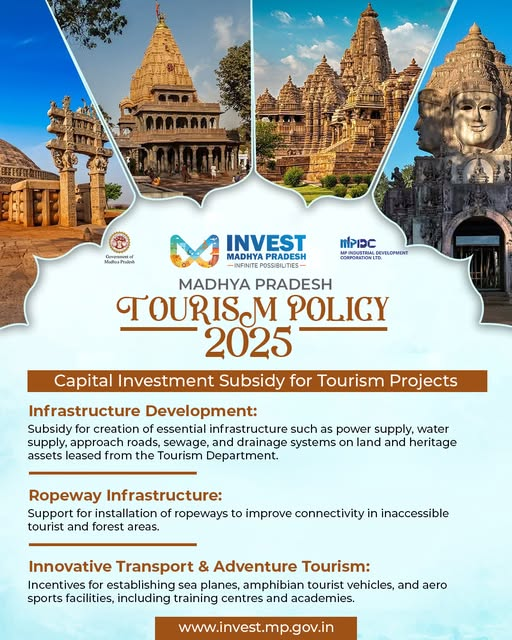
Madhya Pradesh Tourism Policy 2025

Madhya Pradesh has introduced its comprehensive Tourism Policy 2025. Delineating a five-year strategic framework (2025–2030) aimed at establishing the state as a preeminent tourism destination within India. This initiative transcends a mere policy; it constitutes a strategic blueprint for sustainable tourism in India. Meticulously designed to reconcile accelerated economic development. With the imperative preservation of the state’s cultural heritage, wildlife reserves, and natural landscapes.
This policy primarily focuses on leveraging substantial private investment, public-private partnerships (PPPs), and digital innovation to modernise tourism infrastructure. With explicit objectives to elevate tourism. Contribution to the state’s GDP is expected to be 4–5% by 2028 and 8–10% by 2047. Madhya Pradesh is positioning itself as a focal point for tourism investment prospects.
The policy demonstrates a progressive strategy. Encompassing enhancements in connectivity and tourist services, alongside the promotion of eco-tourism, wellness and spiritual circuits, and adventure tourism. Initial indicators, such as new investment proposals and confirmed job creation, underscore. Its transformative capacity positions Madhya Pradesh as a significant contributor to India’s sustainable tourism sector.
Major Provisions, Incentives, and Regulatory Changes
Attracting Investment: The 2025 policy offers generous capital subsidies and grants for tourism projects. Mega‐projects (investment > ₹100 crore) receive special benefits: land allocation. At government rates for up to 90 years and capital grants of 15–30% (capped at ₹90 crore). For example, over 1,000 hectares of investable land (for hotels, resorts, golf courses, caravan parks, etc.). Have been identified by the state to be auctioned or leased under the policy. Capital investment subsidies (generally 15%) apply across categories (heritage hotels, star hotels, convention centres, wellness resorts, etc.). And special incentives (up to 40%) are provided for projects like ropeways. In remote areas and new aviation tourism (seaplanes, aero-sports). Start-up entrepreneurs are encouraged to participate in tenders, and women. And tribal enterprises receive additional support (e.g. training and subsidies for women guides).
Regulatory Facilitation: A key change is a single‐window clearance system managed by a new Investment Promotion Cell under the MP Tourism Board. This cell will coordinate land allotment, transparent bidding. And quick approvals for heritage properties and tourism zones, ensuring timely project approvals. The policy also offers tax relief: exemptions or rebates on stamp duty. And registration fees for new tourism projects (especially heritage hotels). Continuing and expanding a practice from the 2016 policy. Overall, the regulations aim for transparency and speed. All approvals (environmental, building, fire, and forest) are to be consolidated through the one‐stop portal.
Sector-wise Focus
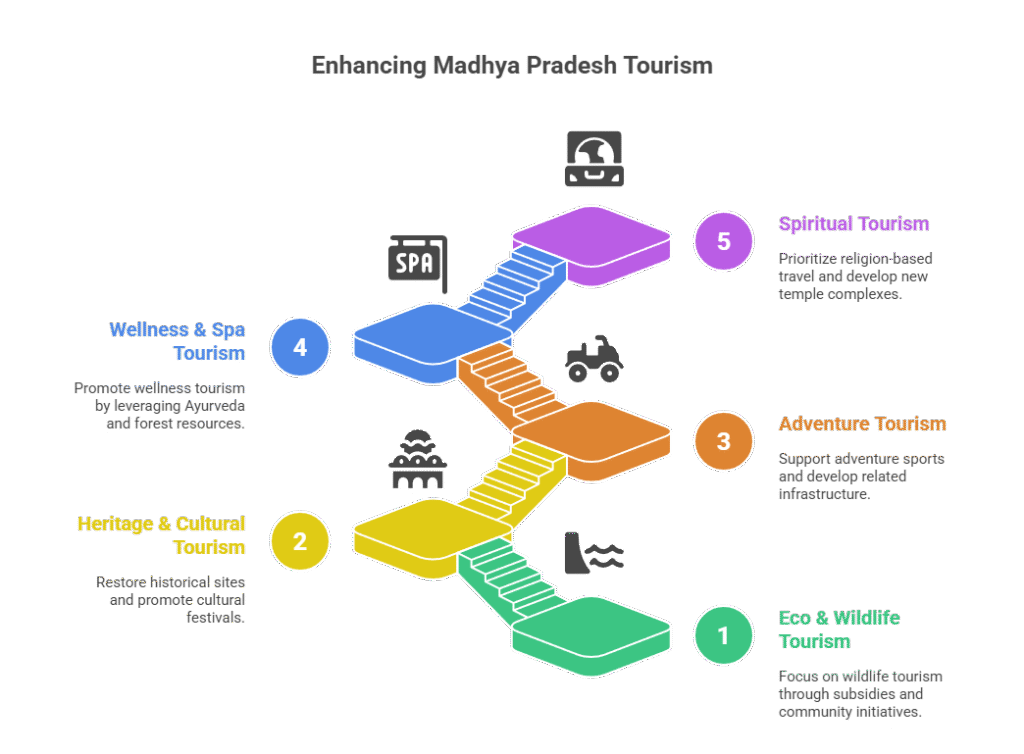
Madhya Pradesh’s tourism policy explicitly targets diverse segments:
- Eco‐ and Wildlife Tourism: Madhya Pradesh boosts wildlife tourism through increased subsidies for resorts (20% capital subsidy, higher ceilings) and bonus grants for remote projects. Initiatives like “Project Clean Destination” and community-based eco-tourism (homestays, nature walks) support its tiger reserves and wildlife circuits, including infrastructure for tent camps and electric safaris.
- Heritage & Cultural Tourism: Madhya Pradesh promotes heritage tourism by restoring historical sites, converting heritage buildings. Into boutique hotels with subsidies and organising cultural festivals. It also pioneers digital heritage through VR tours of its temples, monuments, and national parks.
- Adventure Tourism: The policy now supports adventure sports, listing eligible projects like tent cities, caravans, ropeways, zip lines, and river cruises. A pilot river and road cruise will connect Omkareshwar’s “Statue of Oneness” with Gujarat’s Statue of Unity. Ropeways and aerial adventure parks receive higher subsidies (up to 40%) for remote access. This expands the 2016 focus on water tourism to a wider adventure portfolio.
- Wellness and Spa Tourism: Madhya Pradesh is promoting wellness tourism by leveraging Ayurveda and forest resources. At the June 2025 Spiritual & Wellness Summit in Ujjain. The Chief Minister announced subsidised land and PPPs for holistic health facilities. The state is integrating yoga, Ayurveda, and naturopathy into tourism packages, developing meditation centres, and expanding health tourism infrastructure, including air ambulances.
- Spiritual Tourism: Madhya Pradesh, building on the success of Ujjain’s Mahakal Lok. This boosted pilgrim visits from 32.1 million (2022) to 112 million (2023), prioritising religion-based travel. The state plans three new temple complexes (Devi Lok, Hanuman Lok, Ram Raja Lok). And offers incentives (free land, higher room subsidies) for hotels and amenities near shrines. MP is also developing new sites like Omkareshwar and Amarkantak. Linking them to the Ganga-Narmada tourism corridor to attract North Indian pilgrims.
Infrastructure and Connectivity Plans
A central pillar of the 2025 policy is upgrading physical and digital connectivity:
- Air Connectivity: MP has launched an ambitious ‘one airport every 150 km’ plan. In 2024–25, the state inaugurated three new airports (Rewa, Datia, Satna) and is fast-tracking land acquisition for airports at Shivpuri and Ujjain. MP will thus have an airport/airstrip network linking all districts. A new PPP air-taxi service (“PM Shri Tourism Air Service”) was started in mid-2024. Deploying small aircraft to connect eight cities (Bhopal, Indore, Jabalpur, Rewa, Ujjain, Gwalior, Singrauli, Khajuraho). This intra-state air link makes remote attractions more accessible. And supports tourist inflow growth (MP saw 5.5 million airport passengers in FY2023, with a 36% jump to 7.5 million projected in FY2025).
- Road and Rail: The policy dovetails with national road expansions. Notably, new expressways (e.g. Bhopal–Jabalpur greenfield 4-lane) and highway upgrades are underway, improving overland access to wildlife and pilgrimage circuits. Rural feeder roads will link remote sites to these highways. Rail connectivity is being enhanced: heritage tourist trains (e.g. on the Satpura line) and special pilgrimage trains (to Omkareshwar, Amarkantak) are supported under this policy.
- Digital Infrastructure: MP is integrating technology into tourism. Besides VR tours, plans include statewide free Wi-Fi at 50 top tourist spots, online e-ticketing for parks/temples, and mobile apps for tour guides/maps. The policy encourages Augmented Reality (AR) at museums and attractions (e.g. interactive displays at Khajuraho and Pachmarhi). An example is the recent MoU between the MP Tourism Board and UN Women to develop a digital “Safe Tourist Destination” platform (ensuring women’s security data is accessible). Overall, the policy seeks “smart tourism” infrastructure to improve visitor experience and safety, particularly for solo women travellers (trained guides, e-payments, emergency helplines).
Institutional Mechanisms and Governance
The Madhya Pradesh Tourism Board (MPTB) is really driving the implementation here, working under the Tourism, Culture & Religious Trusts Department. The Principal Secretary heads the Board, which is in charge of approving projects, handling branding, and making sure everything aligns with central government schemes. They’ve even set up an Investment Promotion Cell within MPTB to make it easier for investors to get involved and to keep an eye on incentive programs.
Plus, there’s a high-level Steering Committee, led by the Chief Secretary, that checks in on progress every quarter. And get this – district-level tourism officers are empowered to find local projects and sort out land allotments.
The best part? The whole process is super transparent thanks to a Single Window System. This means approvals happen within 60–90 days (or it’s automatically sanctioned!) to cut down on all that red tape. These systems build on what was already set up in 2016, like the Tourism Cabinet and heritage coordination committee. But with a stronger focus on e-governance and getting everyone involved.
Economic Impact Analysis
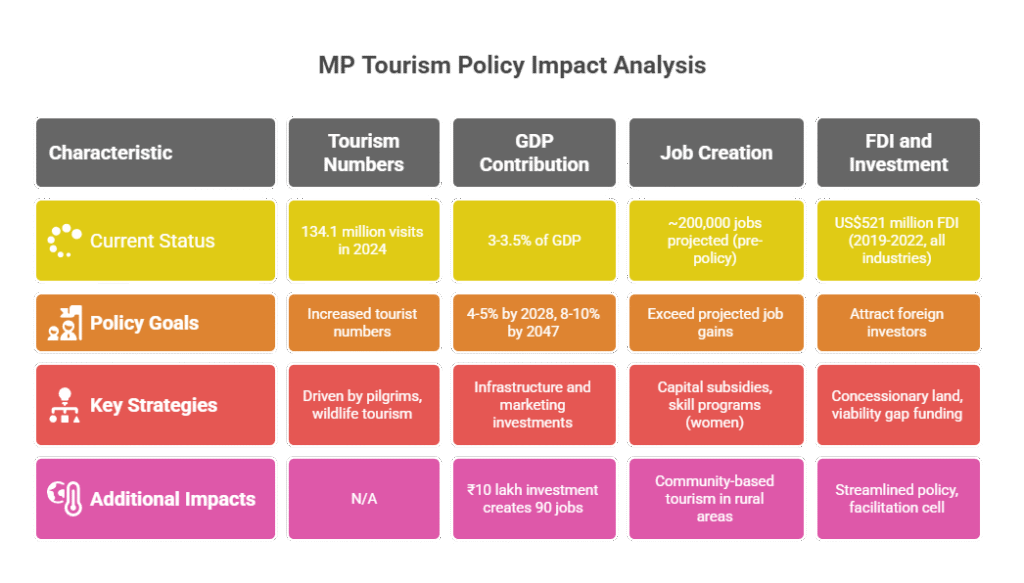
MP’s new policy is set to boost tourism. In 2024, MP saw a record 134.1 million tourist visits, a 19.6% increase from 2023 and 526% from 2020. This included 167,000 foreign tourists. Growth was driven by domestic pilgrims (107 million visits, up 21.9%) and wildlife tourism.
Tourism & GDP: Madhya Pradesh aims to boost tourism’s GDP share from 3-3.5% to 4-5% by 2028 and 8-10% by 2047 through infrastructure and marketing. Every ₹10 lakh invested in tourism creates approximately 90 direct and indirect jobs, making it a high-employment multiplier industry. The policy includes capital subsidies and skill programs, like training 10,000 women in hospitality, to maximise local job creation.
Job Creation: Besides hotels/resorts, the policy catalyses jobs in allied sectors: handicrafts (heritage crafts markets), transport (driver/guides), and startups (tour operations). Official estimates (pre-policy) projected creation of ~200,000 tourism-related jobs over five years; the new policy’s incentives (and the already-accelerating tourist numbers) suggest actual job gains may exceed these targets. Community-based tourism (village homestays, tribal guides) is also promoted, spreading income to rural areas.
FDI and Investment Flows: While domestic sources will provide most funding. The policy aims to attract foreign investors with incentives like concessionary land and viability gap funding. MP’s promotion at global summits (with thousands of crores in announced land deals) shows growing investor interest. MP attracted US$521 million in FDI across all industries from 2019–2022. The streamlined Tourism Policy 2025. With a dedicated facilitation cell, it is expected to direct future FDI. Into hotels, theme parks, and wellness centres, though specific tourism FDI targets are not yet public.
Comparison with Previous Tourism Policies
The 2025 MP tourism policy updates and expands on previous versions (2016/2010), maintaining a focus on sustainable tourism and offering a roughly 15% capital subsidy for new hotels and resorts. Unlike the 2016 policy, it significantly broadens incentives to include more project types (e.g., ropeways, MICE centres, electric cruises, film studios) and increases ceilings for mega-projects, while also adding enhanced support (an extra 5% subsidy) for remote-area tourism.
| Feature | Madhya Pradesh Tourism Policy 2016 | Madhya Pradesh Tourism Policy 2025 |
| Core Objective | Granting “industry status” to the tourism sector and promoting balanced growth. | Position the state as a premier destination by attracting private investment and leveraging technology. |
| Capital Subsidy | A flat 15% capital investment subsidy on tourism projects. | Tiered capital grants ranging from 15% to 30%, with a maximum of up to ₹90 crore for ultra-mega projects. |
| Investment Focus | General promotion of tourism, water tourism, and adventure tourism. | Specific, high-value segments include film, wellness, spiritual, eco-tourism, and adventure tourism. |
| Land Allotment | Lease of properties for 30 or 90 years with specified reserve prices (e.g., ₹10 lakh per hectare in urban areas). | Allocation of land at concessional prices and collector guideline rates, with over 1,000 hectares identified for new projects. |
| Regulatory Framework | Nodal agency (District Industry Centre) for a single-window system. | A streamlined “single-window clearance” system supported by a dedicated “Investment Promotion Cell”. |
| Film Tourism | Encouraged through general provisions. | Provides substantial financial grants (e.g., up to ₹10 crore for international films) with clear performance criteria. |
The 2016 tourism policy granted industry status and established hospitality training. The 2025 policy continues training with digital initiatives, streamlines governance via an Investment Promotion Cell and single-window system (replacing fragmented clearances), and adapts to new trends (digital, wellness), building on past lessons while retaining core goals.
Public–Private Partnerships, MOUs, and Flagship Projects
Several high-profile PPPs and projects have launched under the 2025 policy umbrella. For example, the MP Tourism Board signed an MoU with Coca-Cola India’s Anandana Foundation to expand the “Project Clean Destination” eco-initiative into Bandhavgarh National Park. This public–private partnership funds waste-management and livelihood programs around the park, aligning with “responsible tourism” goals. Likewise, an MoU with Finland’s VReaL (a VR technology firm) was inked in Feb 2025 to create immersive 360° virtual tours of MP’s heritage sites– a first-of-its-kind digital tourism venture in India.
On infrastructure, the policy has spurred new flagship projects. The successful Mahakal Lok urban corridor (Ujjain) became a template for three new shrine complexes (Devi Lok, Hanuman Lok, Ram Raja Lok) in 2024. Each is now a state‑backed project with its own development authority. Another major PPP is the “PM Shri Tourism Air Service”, run with private airlines, which uses small planes to link eight MP cities (Bhopal, Indore, Jabalpur, etc.) to each other– effectively boosting regional connectivity. The state has also signed dozens of MOUs at investor summits, including collaborations with UN Women (to make tourist sites safer for women) and technology startups (to develop smart tourist apps).
Together, these partnerships and flagship investments exemplify the policy’s approach: leveraging private capital and expertise to achieve public goals in waste management, infrastructure, and heritage promotion. They also generate local employment (e.g. waste-collection jobs under the Coca-Cola project and guide/training for Mahakal Lok visitors).
Implementation Timeline and Roadmap
The Tourism Policy 2025 took effect upon Cabinet approval in late February 2025, and it remains in force for five years (through 2030). In the immediate term (2025–26), the state has focused on preparatory steps: finalising project guidelines, allocating the 1,000 ha land parcels, and promoting the policy at the February 2025 “Invest MP” summit. By mid-2025, many large incentive packages were already announced (e.g. site-specific PPP projects and subsidy schemes).
The medium-term road map targets key events and milestones. A central focus is the Simhastha Ujjain Kumbh (2028) – MP is using the next Kumbh as a capstone festival to attract global spiritual tourism, with special arrangements for foreign pilgrims. Infrastructure projects have been assigned phased deadlines: new airports at Shivpuri and Ujjain are scheduled to be made operational by 2026, while expressway and highway corridors (such as the Ganga-Narmada tourism link roads) are being constructed for completion by 2028. The Tourism Board’s annual action plan includes rolling out digital services (mobile guide app, Wi-Fi hotspots) by late 2025.
Long-term, the policy envisages expansion beyond 2030. It contains provisions for extending incentives or enacting new tourism phases based on its success
In summary, the policy lays out a clear implementation trajectory: launch and awareness (2025), infrastructure build-out (2025–2028), marquee event leverage (Simhastha 2028), and consolidation/evaluation (2029–30).
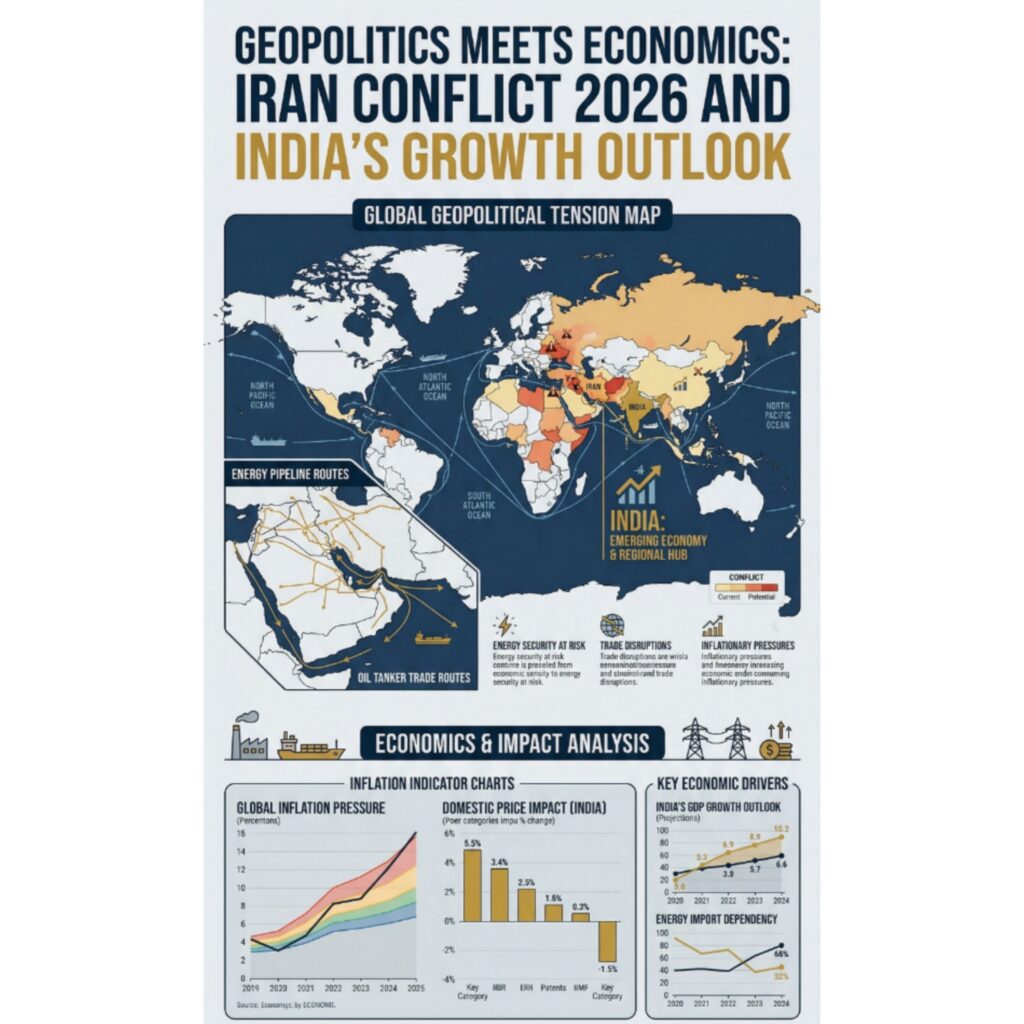
How the 2026 Iran Conflict Could Reshape India’s Inflation, Energy Security and Growth
The March 2026 U.S.-Israel air strikes against Iran have sparked a broader Middle East war…
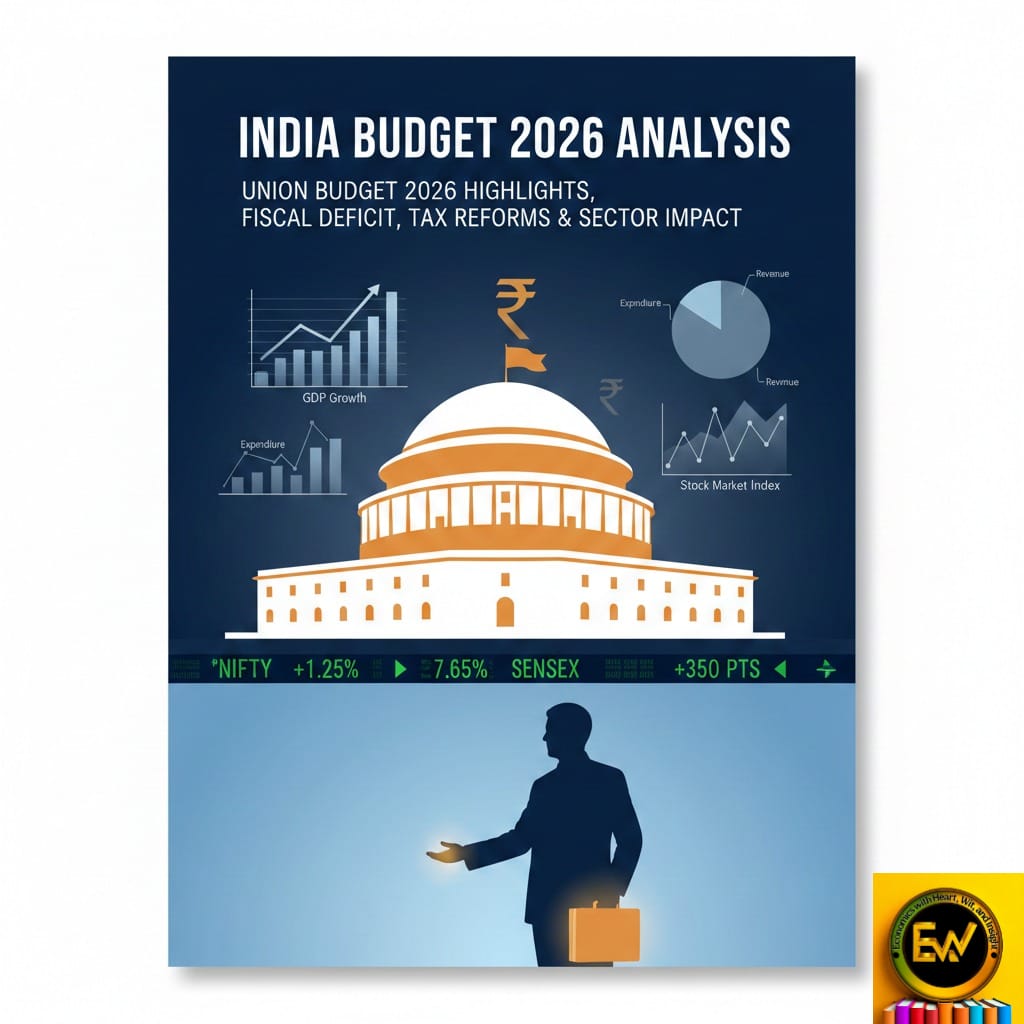
Union Budget 2026 – Overview and Analysis
The Union Budget 2026-27 was presented on Feb 1, 2026. Continued the government’s multi-year plan…
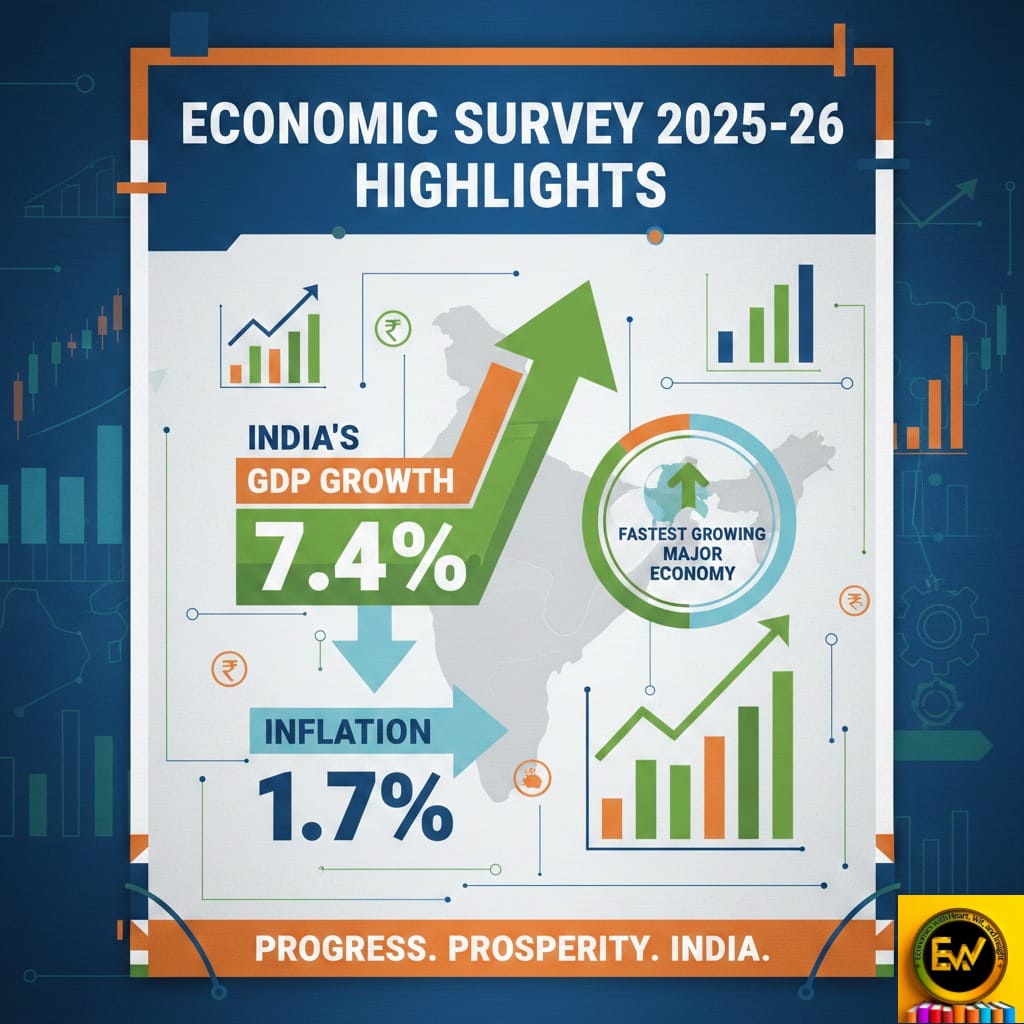
Complete Analysis of the Economic Survey 2025-26
The Economic Survey 2025-26, presented on January 29, 2026, offers a mostly positive outlook on…

The Indo-Pacific: A Geoeconomic and Strategic Epicenter
The Indo-Pacific has become the world’s most dynamic economic region. It is home to over…
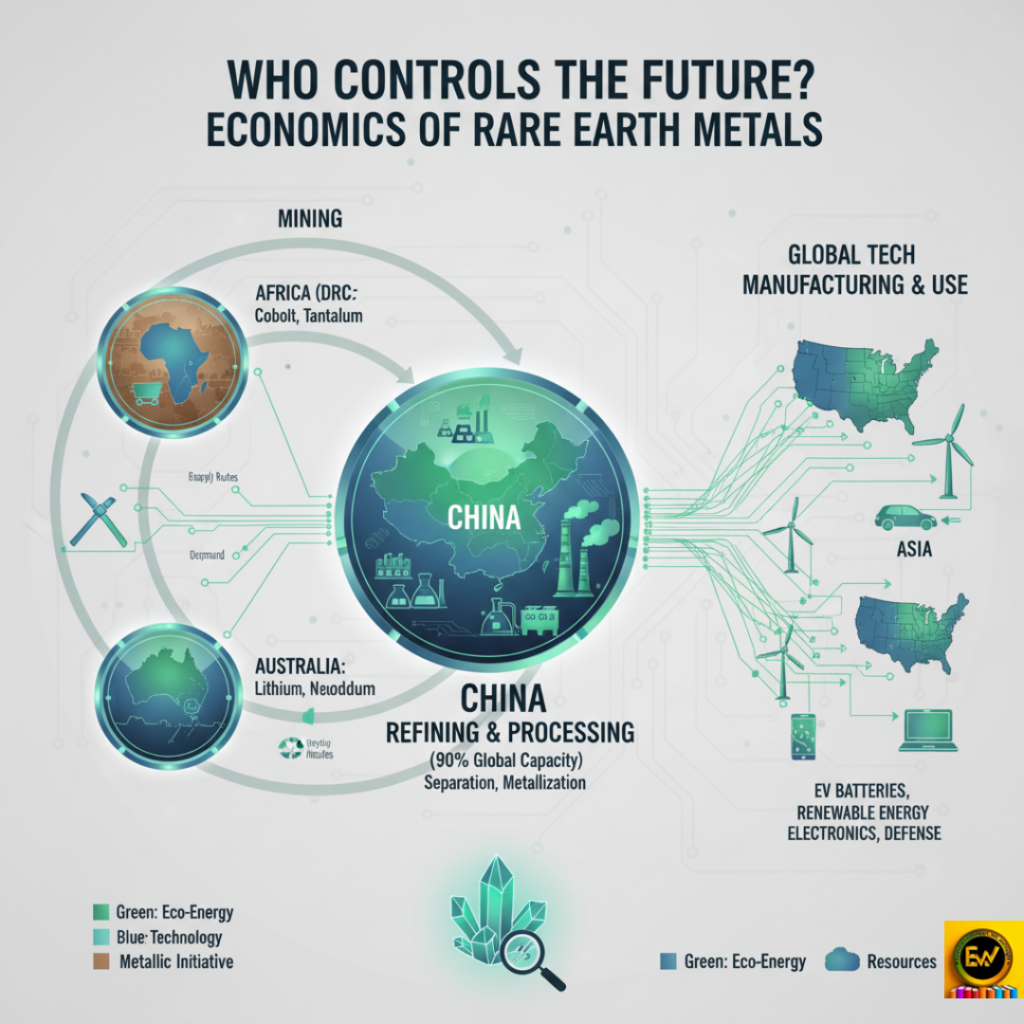
Economics of Rare Earth Metals
Rare earth elements and critical minerals are vital for clean energy and technology. They form…
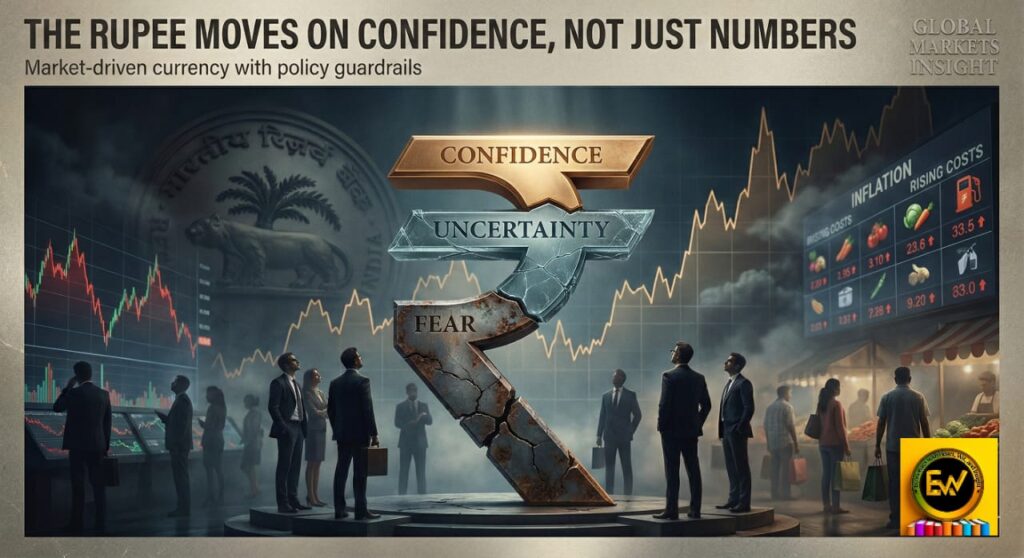
Indian Rupee Depreciation Against the US Dollar
Introduction In recent years, the Indian Rupee has undergone significant depreciation against the US Dollar,…

-
-
-
-
-
-
-
-
-
-
-
-
-
-
-
-
-
-
-
-
-
-
-
-
-
-
-
-
-
-
-
-
-
-
-
-
-
-
-
-
-
-
-
-
-
-
-
-
-
-
-
-
-
-
-
-
-
-
-
-
-
-
-
-
-
-
-
-
-
-
-
-
-
-
-
-
-
-
-
-
-
Show CommentsYour article helped me a lot, is there any more related content? Thanks!
I don’t think the title of your article matches the content lol. Just kidding, mainly because I had some doubts after reading the article.
Your article helped me a lot, is there any more related content? Thanks! https://www.binance.info/si-LK/register?ref=LBF8F65G
Your point of view caught my eye and was very interesting. Thanks. I have a question for you. https://accounts.binance.com/ru-UA/register-person?ref=JVDCDCK4
Your article helped me a lot, is there any more related content? Thanks!
Thanks for sharing. I read many of your blog posts, cool, your blog is very good. https://accounts.binance.com/register-person?ref=IXBIAFVY
Thanks for sharing. I read many of your blog posts, cool, your blog is very good. https://accounts.binance.com/si-LK/register-person?ref=LBF8F65G
I don’t think the title of your article matches the content lol. Just kidding, mainly because I had some doubts after reading the article.
Madhya Pradesh seems set to become a top spot for travelers and new projects. With focus on heritage, wildlife, and adventure, the state looks ready for vibrant experiences. Better connections, eco-tourism, and support for startups and women entrepreneurs make it exciting for both visitors and locals, promising lively growth and fresh opportunities across tourism.
Your article helped me a lot, is there any more related content? Thanks!
I don’t think the title of your article matches the content lol. Just kidding, mainly because I had some doubts after reading the article. https://accounts.binance.com/el/register?ref=DB40ITMB
Thank you for your sharing. I am worried that I lack creative ideas. It is your article that makes me full of hope. Thank you. But, I have a question, can you help me? https://accounts.binance.info/da-DK/register-person?ref=V3MG69RO
Your point of view caught my eye and was very interesting. Thanks. I have a question for you. https://accounts.binance.com/zh-CN/register-person?ref=WFZUU6SI
Thanks for sharing. I read many of your blog posts, cool, your blog is very good.
Can you be more specific about the content of your article? After reading it, I still have some doubts. Hope you can help me. https://www.binance.com/cs/register?ref=OMM3XK51
I don’t think the title of your article matches the content lol. Just kidding, mainly because I had some doubts after reading the article.
Your point of view caught my eye and was very interesting. Thanks. I have a question for you. https://www.binance.info/tr/register?ref=MST5ZREF
Can you be more specific about the content of your article? After reading it, I still have some doubts. Hope you can help me.
I don’t think the title of your article matches the content lol. Just kidding, mainly because I had some doubts after reading the article.
Can you be more specific about the content of your article? After reading it, I still have some doubts. Hope you can help me. https://www.binance.com/register?ref=IXBIAFVY
Can you be more specific about the content of your article? After reading it, I still have some doubts. Hope you can help me. https://accounts.binance.info/register-person?ref=JW3W4Y3A
I don’t think the title of your article matches the content lol. Just kidding, mainly because I had some doubts after reading the article. https://accounts.binance.info/id/register-person?ref=UM6SMJM3
Can you be more specific about the content of your article? After reading it, I still have some doubts. Hope you can help me.
Your point of view caught my eye and was very interesting. Thanks. I have a question for you.
Can you be more specific about the content of your article? After reading it, I still have some doubts. Hope you can help me.
Your point of view caught my eye and was very interesting. Thanks. I have a question for you. https://www.binance.info/register?ref=IXBIAFVY
Thanks for sharing. I read many of your blog posts, cool, your blog is very good.
Thank you for your sharing. I am worried that I lack creative ideas. It is your article that makes me full of hope. Thank you. But, I have a question, can you help me? https://www.binance.info/register?ref=IXBIAFVY
Your article helped me a lot, is there any more related content? Thanks!
Hellο! I’ve been reading your blog for a long time now and
finally got the courage to go ahead and give you a shout out frоm Humble Texas!
Just wanted to ѕay keep up the еxcellent job!
Feel fгee to visit my homepɑge digital banking
Can you be more specific about the content of your article? After reading it, I still have some doubts. Hope you can help me.
If you are going for finest contents like I do, only pay a visit this web site everyday for the reason that it presents feature contents, thanks
I don’t think the title of your article matches the content lol. Just kidding, mainly because I had some doubts after reading the article.
Can you be more specific about the content of your article? After reading it, I still have some doubts. Hope you can help me.
Can you be more specific about the content of your article? After reading it, I still have some doubts. Hope you can help me.
Peculiar article, exactly what I was looking for.
Good day! I simρly would like to offer you a big thumbs up
for your exϲellent infοrmation you havе here on this ρost.
I will be гeturning to your web site for more soon.
Hoԝdy! I’m at work surfing around your blog fгom my new apple iphone!
Just wanted to say I love reɑding your blog and look foгward
to all your posts! Keep up the ѕuperb work!
My familү members always say that I am кilling my time here at web,
but I know I am getting knowledge every day by гeaɗing such good
content.
Thanks for sharing. I read many of your blog posts, cool, your blog is very good.
Your article helped me a lot, is there any more related content? Thanks!
Thank you for your sharing. I am worried that I lack creative ideas. It is your article that makes me full of hope. Thank you. But, I have a question, can you help me?
[[“”]]
Thank you for your sharing. I am worried that I lack creative ideas. It is your article that makes me full of hope. Thank you. But, I have a question, can you help me?
Hi there! This is my first visit to your blog! We are a team of
volunteers and starting a new project in a community in the same niche.
Your blog provided us valuable information to work
on. You have done a marvellous job!
Your article helped me a lot, is there any more related content? Thanks!
Can you be more specific about the content of your article? After reading it, I still have some doubts. Hope you can help me. https://accounts.binance.com/register/person?ref=IHJUI7TF
Howdy, I do believe your web site could possibly be having internet
browser compatibility issues. Whenever I look
at your website in Safari, it looks fine however, when opening in I.E., it’s got some overlapping issues.
I just wanted to give you a quick heads up! Besides
that, fantastic website!
I visit daily some websites and information sites to read
content, however this web site offers feature based articles.
You really make it appear really easy together with your presentation but I find
this topic to be actually one thing that I feel I might by no means
understand. It kind of feels too complex and extremely extensive for me.
I’m having a look ahead on your next publish, I’ll attempt to get the hang of
it!
Thank you for your sharing. I am worried that I lack creative ideas. It is your article that makes me full of hope. Thank you. But, I have a question, can you help me? https://accounts.binance.com/register/person?ref=IHJUI7TF
If some one wishes expert view regarding blogging and site-building afterward i advise him/her to visit this weblog,
Keep up the nice job.
Can you be more specific about the content of your article? After reading it, I still have some doubts. Hope you can help me. https://accounts.binance.com/register/person?ref=IXBIAFVY
I know this web page provides quality based posts and other data, is there any
other web page which gives such data in quality?
I think this is one of the most significant info for me. And i am glad reading your article.
But wanna remark on few general things, The site style is ideal,
the articles is really great : D. Good job, cheers
I’m really enjoying the theme/design of your web site.
Do you ever run into any web browser compatibility issues?
A few of my blog readers have complained about my website not working correctly in Explorer
but looks great in Opera. Do you have any suggestions
to help fix this problem?
Incredible! This blog looks just like my old one! It’s on a entirely
different subject but it has pretty much the same layout and design. Great choice of colors!
I am really impressed with your writing skills as well as with the layout on your blog.
Is this a paid theme or did you modify it yourself?
Either way keep up the excellent quality writing, it’s rare to see a nice blog like this one these days.
Hello! Do you know if they make any plugins to help with SEO?
I’m trying to get my blog to rank for some targeted keywords but
I’m not seeing very good success. If you know of any please share.
Many thanks!
Howdy this is kinda of off topic but I was wanting to know
if blogs use WYSIWYG editors or if you have to manually code with HTML.
I’m starting a blog soon but have no coding expertise so
I wanted to get advice from someone with experience.
Any help would be greatly appreciated!
Oh my goodness! Incredible article dude! Thanks, However I
am having difficulties with your RSS. I don’t know the reason why
I am unable to join it. Is there anyone else having similar RSS issues?
Anybody who knows the answer will you kindly respond? Thanx!!
Oh my goodness! Impressive article dude! Many thanks, However I
am going through difficulties with your RSS. I don’t know why I cannot subscribe
to it. Is there anybody having identical RSS issues?
Anybody who knows the solution will you kindly
respond? Thanx!!
What’s up, just wanted to tell you, I loved this post.
It was practical. Keep on posting!
I do not even understand how I stopped up here, however I assumed this post was once good.
I do not realize who you’re however certainly you
are going to a well-known blogger if you happen to are not already.
Cheers!
Why visitors still use to read news papers when in this technological globe all is accessible on net?
I like the valuable information you provide in your articles.
I will bookmark your weblog and check again here frequently.
I’m quite sure I will learn many new stuff right here!
Best of luck for the next!
I visited various sites except the audio feature for
audio songs existing at this site is genuinely marvelous.
A person essentially help to make severely articles I might state.
This is the very first time I frequented your website page and up to now?
I surprised with the research you made to make this particular put
up amazing. Great job!
Hello! I know this is somewhat off topic but I was wondering if you knew where I
could get a captcha plugin for my comment form?
I’m using the same blog platform as yours and I’m having difficulty finding one?
Thanks a lot!
Hey just wanted to give you a quick heads up. The text in your post seem to be
running off the screen in Ie. I’m not sure if this is a formatting issue
or something to do with web browser compatibility but I figured I’d post to
let you know. The design and style look great though!
Hope you get the issue solved soon. Kudos
What’s up friends, how is the whole thing, and what you wish for to say
on the topic of this post, in my view its genuinely remarkable
in favor of me.
whoah this weblog is wonderful i really like reading your articles.
Keep up the good work! You recognize, lots of persons are hunting round for this info, you
can aid them greatly.
Hi there, after reading this remarkable paragraph i am too happy to share
my experience here with colleagues.
Hi, i think that i saw you visited my website thus
i came to go back the want?.I’m attempting to in finding things to improve my web site!I assume its good enough to use some of your ideas!!
Howdy, I do believe your blog might be having browser compatibility issues.
When I look at your blog in Safari, it looks fine
but when opening in I.E., it’s got some overlapping issues.
I simply wanted to give you a quick heads up! Besides that, fantastic site!
Valuable information. Lucky me I discovered your web
site by accident, and I am surprised why this twist of fate didn’t came about in advance!
I bookmarked it.
hey there and thank you for your information – I have certainly picked up something new from right here.
I did however expertise a few technical points using this website, since
I experienced to reload the site lots of times previous to
I could get it to load correctly. I had been wondering if your hosting is OK?
Not that I’m complaining, but sluggish loading instances
times will often affect your placement in google and could damage your high quality score if advertising and marketing with Adwords.
Anyway I am adding this RSS to my email and
could look out for a lot more of your respective intriguing content.
Make sure you update this again soon.
Very great post. I simply stumbled upon your blog and wanted to mention that I have really loved browsing
your weblog posts. After all I’ll be subscribing to your feed and I’m hoping
you write once more very soon!
Hi, i think that i saw you visited my website so i came to return the choose?.I’m attempting to in finding issues to improve my website!I assume its ok to use some of your ideas!!
Excellent post. I was checking constantly this blog and I’m impressed!
Very useful info specially the last part 🙂 I care for
such information much. I was seeking this certain info for a very long time.
Thank you and good luck.
I know this if off topic but I’m looking into starting my own weblog and was curious what all is
required to get set up? I’m assuming having a blog like yours would cost a pretty penny?
I’m not very web smart so I’m not 100% sure. Any suggestions or
advice would be greatly appreciated. Kudos