
When the Weather Hits Your Wallet: Monsoon to Climate Change and the Rising Cost of Living

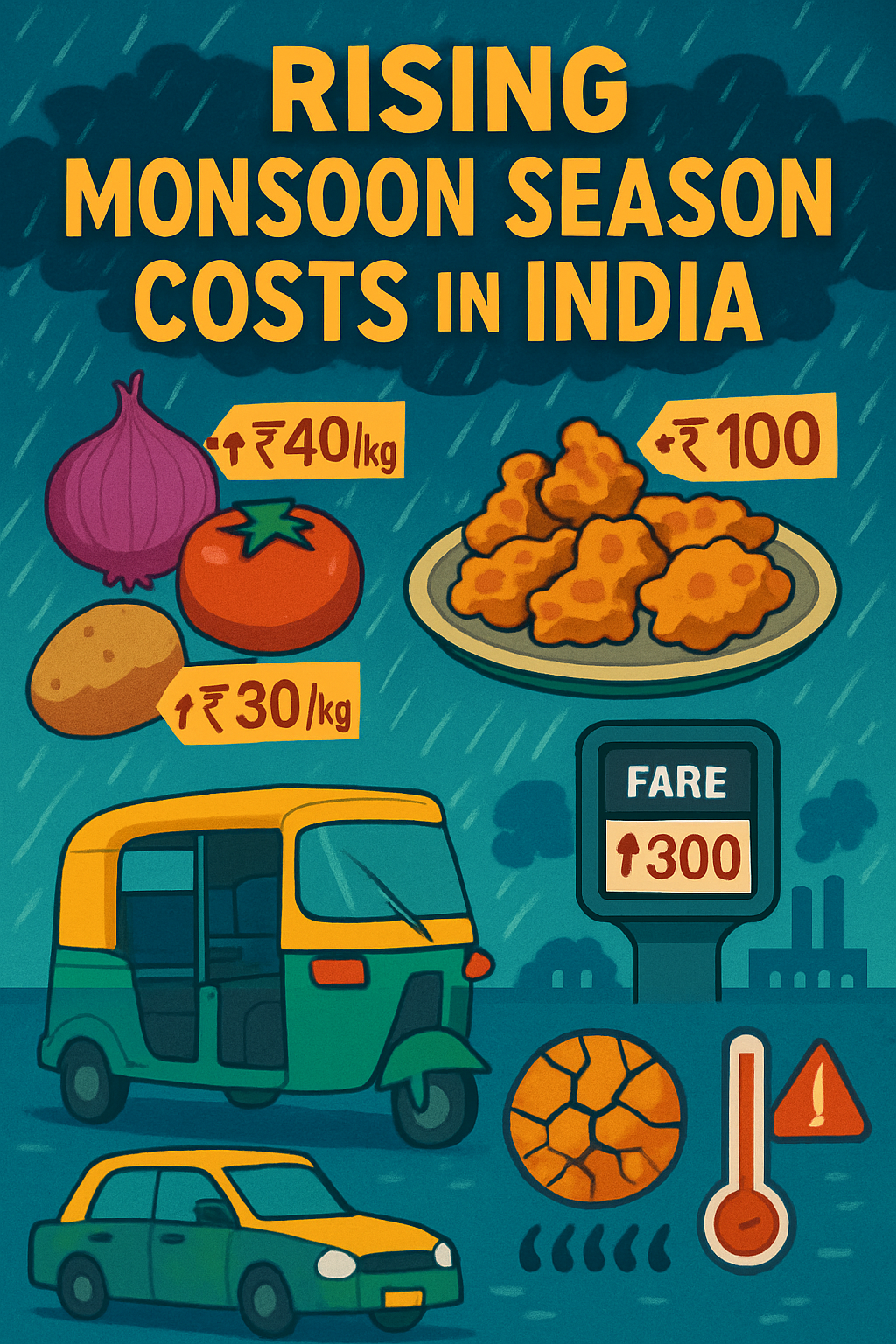
In India, the Monsoon season typically spans from June to September. With the advent of the monsoon, there is a noticeable increase in the desire for fried and deep-fried food items. This culinary inclination often leads to the preparation of bhajiyas or pakoras in homes, which are traditionally complemented by a cup of tea. However, it is worth noting that during the monsoon season, there is a consistent trend of increased prices for daily essential products.
This phenomenon raises a pertinent question about the underlying reasons for such price escalations, particularly concerning the ingredients essential for preparing popular monsoon dishes like bhajiyas and pakoras. For instance, the cost of potatoes, tomatoes, onions, brinjal, cauliflower, and similar produce tends to rise significantly each monsoon season.
A deeper examination into the rationale behind these increased expenditures for common monsoon delicacies is warranted to understand the precise contributing factors.
The Grocery Bill Shock: When Weather Hits Food Prices
Vegetable Price Volatility
The weather can have a quick and noticeable effect on your finances, especially at the grocery store. Heavy rain and extreme temperatures can lead to sharp price increases for essential vegetables. During India’s 2024 monsoon season, tomato prices jumped from ₹30-40 per kilogram to over ₹100 per kilogram, which is a whopping 150-200% rise. Similarly, onion prices climbed to ₹70 per kilogram, and leafy vegetables became harder to find.
These are not isolated cases. Price hikes due to weather are becoming common. Research shows that extreme weather events from 2022 to 2024 caused significant price increases in 18 countries, including:
- South Korean cabbage prices are rising 70% after an August heatwave
- Rice prices in Japan are increasing by 48% following record-breaking heat
- Potato prices in India are jumping 81% in early 2024
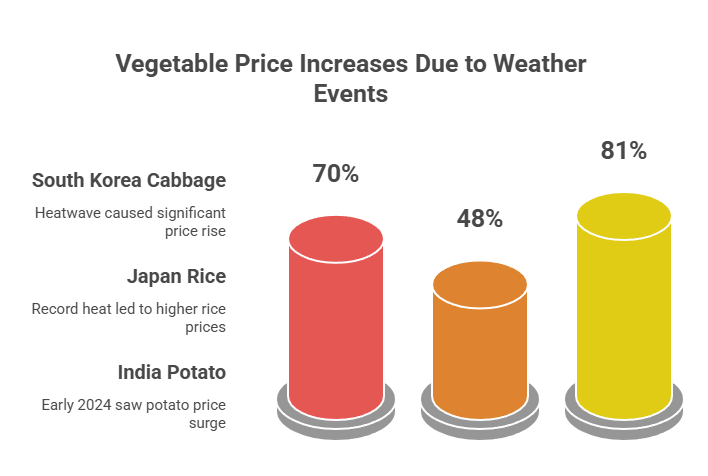
Vegetable price increases due to weather events
Climate Change’s Long-term Food Inflation Impact
The link between temperature and food costs is becoming more worrisome. Studies show that higher temperatures consistently raise food inflation in both rich and developing countries. By 2035, global warming could push food price inflation up by 0.9 to 3.2 percentage points each year. The effects of temperature on agriculture are serious. An increase of 2.5 to 4.9°C could cut wheat yields by 41 to 52% and rice yields by 32 to 40%. The Reserve Bank of India found that a one-unit rise in temperature deviation adds 2.60 to the Consumer Price Index for vegetables.
Transportation Surge: When Weather Drives Up Ride Costs
Rain-Induced Surge Pricing
The weather’s impact on transportation costs is immediate and often painful for consumers. Rain is the biggest trigger for taxi fare increases. When precipitation begins, demand for ride-sharing services surges as people abandon walking and public transport, while many drivers go offline to avoid waterlogged roads.
Real-world examples demonstrate the severity of this impact:
- A Gurugram resident faced ₹700 for a 1.8-kilometre trip during rain – representing a 300% surge
- New York City studies show Uber fares rise 5-8% on rainy days, while taxi demand increases 20-25%
- In Mumbai and Delhi, monsoon rains push surge pricing 2-3 times higher
Winter Weather’s Costly Impact
Snowstorms create even more dramatic price increases. Fewer drivers risk icy roads while demand skyrockets as people avoid walking in harsh conditions. In cities like Chicago, Toronto, and New York, Uber fares often double or triple during snowstorms. One extreme case saw an Uber passenger charged $600 after getting stuck in a Virginia snowstorm for 20 hours.
Weather’s Broader Transportation Effects
According to the Federal Highway Administration, weather causes 23% of all roadway delays, resulting in over 32 billion lost vehicle-hours and costing the Tampa Bay area alone $56.6 million annually in weather-related delays.
Retail Therapy: How Weather Changes Shopping Behaviour
Channel Shifting Patterns
Weather significantly influences not only what we buy but also how and where we shop. Research shows that on wet or cold days, website traffic increases by 12% for retailers in the home and furniture, wholesale, and clothing sectors. However, this change doesn’t necessarily make up for lost in-store sales; it marks a fundamental shift in consumer behaviour.
In India, weather affects not just what we buy; it also impacts where we make those purchases. On heavy monsoon days in Mumbai or Kolkata, e-commerce traffic surges, particularly for categories like home décor, electronics, and ethnic wear. Retailers report that online orders often rise by double digits, even as mall visits decline sharply. This isn’t just a rainy-day alternative; it indicates a change in shopper habits. More and more, people prefer to browse sari collections or home furnishing deals from their couch while the rain pours outside.
Mood-Driven Spending Changes
Weather’s Psychological Shopping Trigger
The weather greatly affects consumer behaviour and spending through noticeable mood changes. Research indicates that better weather (more visibility, warmer temperatures, less wind) leads to a 3.25% increase in spending, similar to the effects of major economic boosts. Sunlight exposure lowers negative feelings, which directly raises the willingness to spend. Consumers in sunlight display a 37% higher willingness to pay for green tea and 56% more for gym memberships.
India’s Mood-Weather-Money Connection
Temperature changes lead to clear mood and spending patterns across India. When temperatures rise above 40°C, demand for uplifting products goes up. Sales of fizzy drinks increase by 60%, and ice cream sales show similar trends. On the other hand, monsoon seasons cause moisturiser demand to double as consumers look for comforting products to help with mood changes caused by the weather.
Digital Platforms Capitalise on Weather Moods
E-commerce platforms observe that sales increase by 10 to 15 per cent during extreme weather conditions due to shifts in consumer mood. Quick commerce sees the highest profits in the summer when managing mood becomes important. Consumers are often willing to pay more for comfort products that provide instant satisfaction. The effects of weather on mood are intensified by social media use. There is a clear link between smartphone use and compulsive buying behaviour among Indian youth.
Seasonal Affective Patterns lead to predictable spending cycles. During winter, comfort purchases rise by 25% each year as consumers use retail therapy to cope with mood changes. The Indian sunscreen market’s 8.9% CAGR growth highlights how consumers actively manage their mood, seeing sun protection as crucial for maintaining a positive self-image and confidence.
The Broader Economic Picture: Trillion-Dollar Weather Impacts
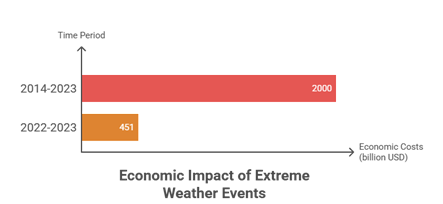
National Economic Consequences
The weather’s economic impact reaches macroeconomic levels. Studies show that extreme heat and severe droughts reduce a country’s GDP by approximately 0.2%. For context, this seemingly small percentage translates to billions of dollars when applied to major economies.
The Organisation for Economic Cooperation and Development (OECD) reports that those who see the greatest damage from weather events experience a 2.2% drop in regional GDP, which at 1.7% still present 5 years down the line. Additionally, out of the 20+ countries we examined that experienced these extreme weather events, we observed an average annual decline of 0.3% in GDP. Future Projections Are Very Costly. Looking forward, we are to see a large-scale economic impact. Research reports that by 2060, the global economy may experience a GDP drop of between 0.6% and 4.6%, which is attributed to heat stress. In the most serious of climate change scenarios, we see GDP fall as far as 45% by the end of the century
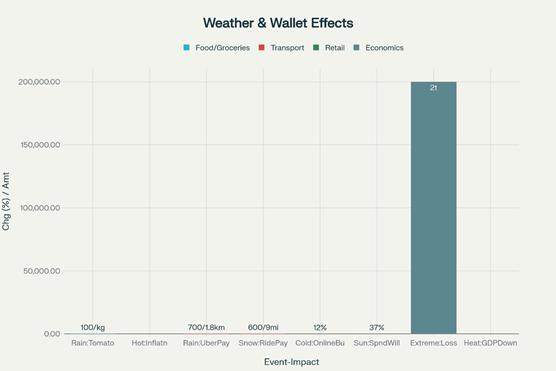
How Weather Affects Your Wallet: From Vegetables to Uber Rides – A comprehensive breakdown of weather’s impact on personal finances
Regional Variations and Adaptation Strategies: Disproportionate Impacts
Regional Differences and Coping Mechanisms Unequal Burden The financial consequences of extreme weather activity are not universal. The small island developing states suffer the greatest brunt of the impact. Take Hurricane Maria, for example. It struck in 2017 and caused economic losses of more than three hundred per cent of Dominica’s annual GDP. Greater diversified economies, however, tend to be more resilient to weather-related shocks, especially if the economy is more developed and income levels are higher. Vulnerability by Industry: Weather susceptibility is unevenly allocated among industries. The food and beverage sector, pharmaceutical manufacturers, and clothing retailers suffer the greatest weather-driven demand changes. The impacts on agriculture are devastating. In 2023, India’s agriculture sector alone suffered a $71.9 billion loss in economic productivity due to the heatwave-induced underutilization of labour.
The Path Forward: Prepping Your Piggy Bank for Weather.
Understanding the New Normal
As climate change progresses and weather becomes more volatile, we will see greater and more frequent financial impacts. Central banks and economic researchers report that weather-related price volatility is “to become a very common element of our integrated global food system”. Practical Adaptation Strategies.
Although people don’t have control over the weather, we can see that these patterns play a role in financial planning.
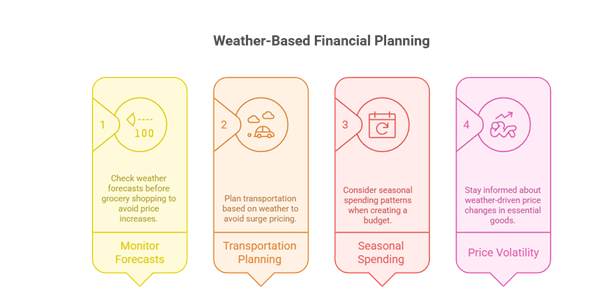
- Watch weather forecasts before big grocery shopping trips to avoid price spikes.
- Use weather-informed transport solutions to avoid high prices.
- Think about seasonal trends when budgeting.
- Stay tuned to reports of price fluctuation in basic goods, which are weather-dependent.
The issue of weather and wallet is a complex one, which is also immediate and is growing in magnitude. As climate change progresses to produce more extreme weather events, the financial impact on people all over the world will increase, which in turn will make weather literacy a very important element of personal financial management.
In our food choices from what is put on the table to the price we pay for transport, weather plays a role in our economic lives, which goes beyond what we see out our doors. By which we see these connections, we are able to better navigate the weather-dependent economy we are seeing play out and prepare for a world in which climate and business are ever more entwined.



-
-
-
-
-
-
-
-
-
-
-
-
-
-
-
-
-
-
-
-
-
-
-
-
-
-
-
-
-
-
-
-
-
-
-
-
-
-
-
-
-
-
-
-
-
Show CommentsWell done Medhe and Ashish💫
Thank you so much. Your words mean a lot to both of us
Thanks for sharing. I read many of your blog posts, cool, your blog is very good.
Can you be more specific about the content of your article? After reading it, I still have some doubts. Hope you can help me.
I don’t think the title of your article matches the content lol. Just kidding, mainly because I had some doubts after reading the article.
Your article helped me a lot, is there any more related content? Thanks!
Thank you for your sharing. I am worried that I lack creative ideas. It is your article that makes me full of hope. Thank you. But, I have a question, can you help me? https://accounts.binance.com/si-LK/register?ref=LBF8F65G
Thank you for your sharing. I am worried that I lack creative ideas. It is your article that makes me full of hope. Thank you. But, I have a question, can you help me?
Your point of view caught my eye and was very interesting. Thanks. I have a question for you.
Thanks for sharing. I read many of your blog posts, cool, your blog is very good.
Can you be more specific about the content of your article? After reading it, I still have some doubts. Hope you can help me. https://accounts.binance.com/si-LK/register-person?ref=LBF8F65G
Can you be more specific about the content of your article? After reading it, I still have some doubts. Hope you can help me.
Can you be more specific about the content of your article? After reading it, I still have some doubts. Hope you can help me. https://accounts.binance.com/ES_la/register?ref=VDVEQ78S
Thanks for sharing. I read many of your blog posts, cool, your blog is very good.
Your point of view caught my eye and was very interesting. Thanks. I have a question for you. https://accounts.binance.info/de-CH/register-person?ref=W0BCQMF1
Can you be more specific about the content of your article? After reading it, I still have some doubts. Hope you can help me.
Your article helped me a lot, is there any more related content? Thanks!
Your point of view caught my eye and was very interesting. Thanks. I have a question for you.
Your article helped me a lot, is there any more related content? Thanks! https://www.binance.info/es-AR/register?ref=UT2YTZSU
Thank you for your sharing. I am worried that I lack creative ideas. It is your article that makes me full of hope. Thank you. But, I have a question, can you help me? https://www.binance.com/en-ZA/register?ref=B4EPR6J0
Thanks for sharing. I read many of your blog posts, cool, your blog is very good.
Your point of view caught my eye and was very interesting. Thanks. I have a question for you.
I don’t think the title of your article matches the content lol. Just kidding, mainly because I had some doubts after reading the article.
Thank you for your sharing. I am worried that I lack creative ideas. It is your article that makes me full of hope. Thank you. But, I have a question, can you help me?
I don’t think the title of your article matches the content lol. Just kidding, mainly because I had some doubts after reading the article. https://www.binance.info/zh-TC/register?ref=DCKLL1YD
Can you be more specific about the content of your article? After reading it, I still have some doubts. Hope you can help me. https://accounts.binance.com/uk-UA/register-person?ref=XZNNWTW7
Reading your article helped me a lot and I agree with you. But I still have some doubts, can you clarify for me? I’ll keep an eye out for your answers. https://www.binance.info/register?ref=QCGZMHR6
Reading your article helped me a lot and I agree with you. But I still have some doubts, can you clarify for me? I’ll keep an eye out for your answers. https://www.binance.info/register?ref=QCGZMHR6
I don’t think the title of your article matches the content lol. Just kidding, mainly because I had some doubts after reading the article.
I don’t think the title of your article matches the content lol. Just kidding, mainly because I had some doubts after reading the article. https://www.binance.info/de-CH/register?ref=W0BCQMF1
Thanks for sharing. I read many of your blog posts, cool, your blog is very good. https://www.binance.com/register?ref=IHJUI7TF
I don’t think the title of your article matches the content lol. Just kidding, mainly because I had some doubts after reading the article. https://accounts.binance.info/pt-PT/register-person?ref=KDN7HDOR
Thanks for sharing. I read many of your blog posts, cool, your blog is very good.
Can you be more specific about the content of your article? After reading it, I still have some doubts. Hope you can help me.
Can you be more specific about the content of your article? After reading it, I still have some doubts. Hope you can help me.
Your article helped me a lot, is there any more related content? Thanks! https://www.binance.info/register?ref=IHJUI7TF
Thanks for sharing. I read many of your blog posts, cool, your blog is very good.
Your point of view caught my eye and was very interesting. Thanks. I have a question for you. https://www.binance.com/register?ref=MBLCVVZG
Thank you for your sharing. I am worried that I lack creative ideas. It is your article that makes me full of hope. Thank you. But, I have a question, can you help me? https://www.binance.bh/ru-UA/futures/ref?code=JVDCDCK4
Thank you for your sharing. I am worried that I lack creative ideas. It is your article that makes me full of hope. Thank you. But, I have a question, can you help me?
Your article helped me a lot, is there any more related content? Thanks!
Can you be more specific about the content of your article? After reading it, I still have some doubts. Hope you can help me.
Thank you for your sharing. I am worried that I lack creative ideas. It is your article that makes me full of hope. Thank you. But, I have a question, can you help me?
Thanks for sharing. I read many of your blog posts, cool, your blog is very good. https://accounts.binance.com/register/person?ref=QCGZMHR6
I don’t think the title of your article matches the content lol. Just kidding, mainly because I had some doubts after reading the article. https://accounts.binance.com/pt-PT/register-person?ref=KDN7HDOR